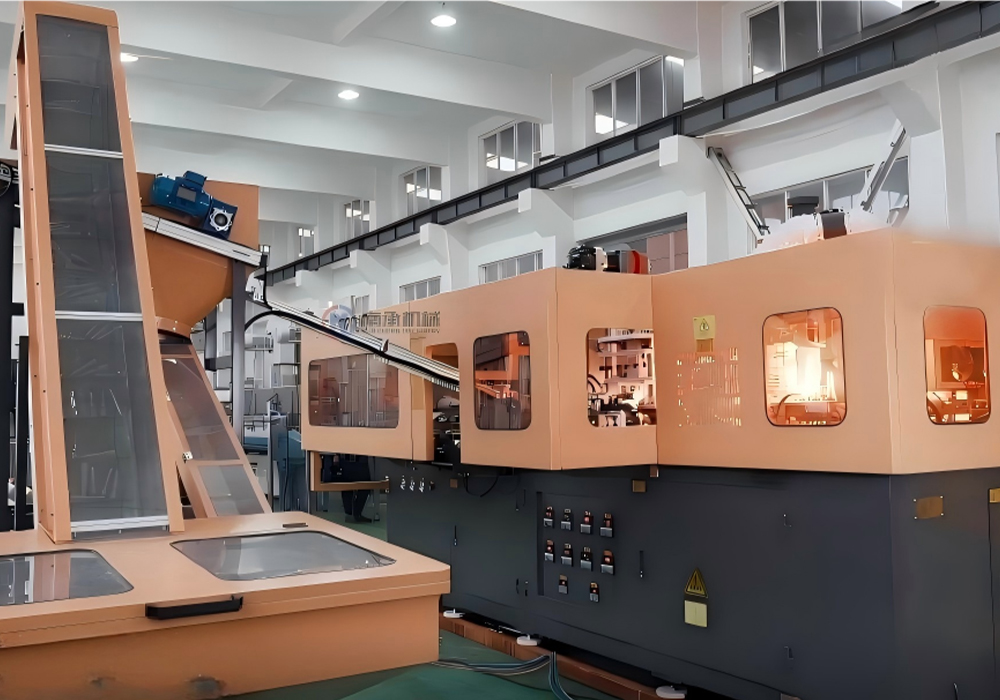
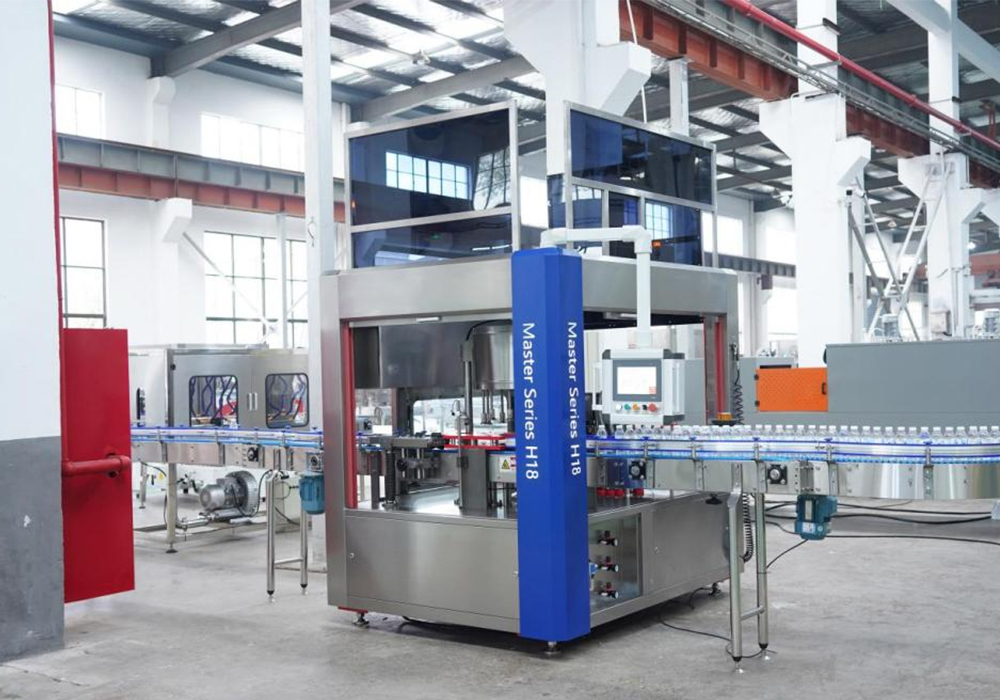
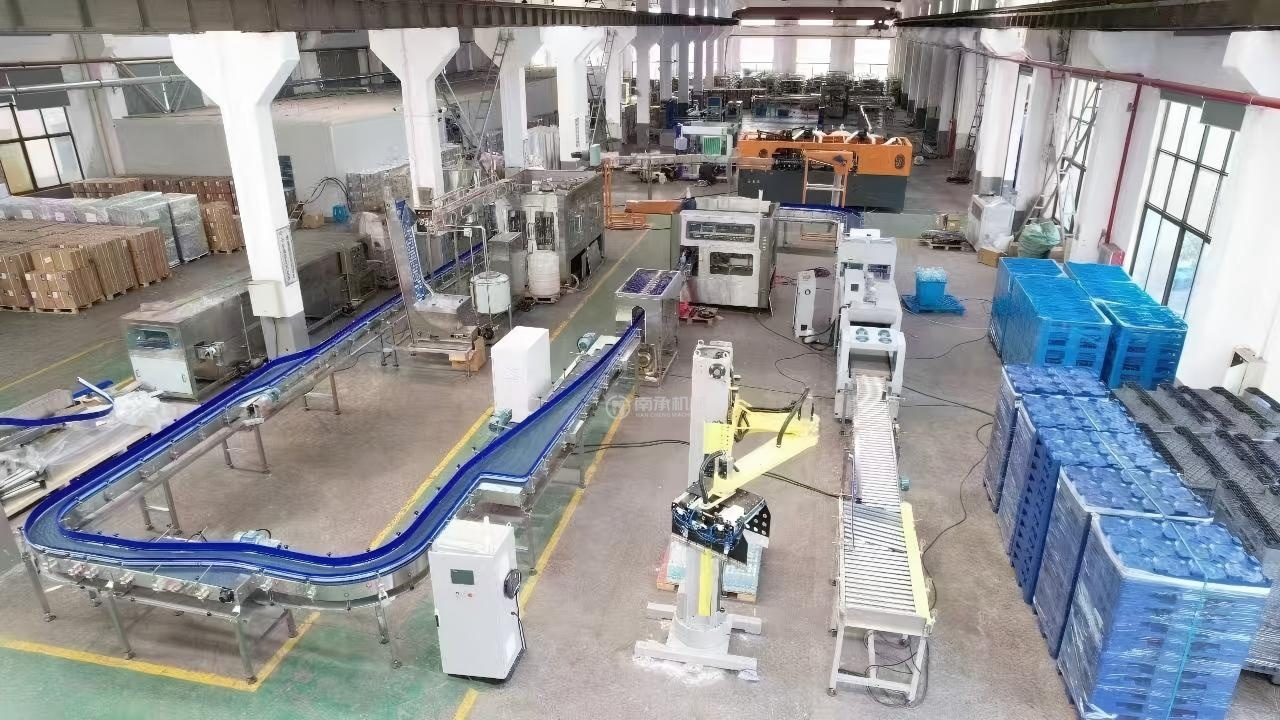
We provide configurations for every scale, from startup factories to large-scale industrial plants.
Our juice production line supports capacities from 2,000 BPH to 36,000 BPH, suitable for both startup and large-scale beverage factories.
Designed for hot filling applications (85–92°C), the system ensures stable performance, flexible bottle compatibility, and efficient production for juice, tea, and functional drinks.
| Capacity(500ML) | 2000-4000BPH | 6,000-8,000 BPH | 12,000-15,000 BPH | 20,000+ BPH |
| Automation | Semi/Full Auto | Fully Automatic | High-Speed Auto | Industrial Grade |
| Floor area | 300㎡ | 600㎡ | 1200㎡ | 2500㎡+ |
| Filling Temp | 85-92 °C | 85-92 °C | 85-92 °C | 85-92 °C |
| Operators | 4-6 | 6-8 | 8-10 | 10-12 |
| Factory Scale | Startup / Small Plant | Growing Business | Medium Factory | Large Industrial Plant |


| Step 1 | ![]() |
| Step 2 | ![]() |
| Step 3 | ![]() |
| Step 4 | ![]() |
| Step 5 | ![]() |
| Step 6 | ![]() |
| Step 7 | ![]() |
| Step 8 | ![]() |
| Step 9 | ![]() |


| Name | Size | Downloads | Download |
|---|---|---|---|
| Nancheng Product Catalog.pdf | 22.96MB | 304 |
To provide an accurate solution, we require key technical details from the client.
These include production capacity, bottle size and type, product formulation, labeling and packaging requirements, and factory layout.
With this information, we can design a customized juice processing and filling system tailored to your needs.
Yes, we offer complete turnkey solutions for juice bottling plants.
Our services include equipment design, manufacturing, installation, commissioning, and operator training.
We ensure seamless integration of all systems, helping clients start production quickly and efficiently.
The price of a juice production line depends on multiple factors.
These include production capacity, level of automation, bottle type, processing technology, and packaging configuration.
Additional systems such as advanced UHT sterilizers, high-speed labeling machines, and automated palletizing can increase the overall investment.
Shelf life in juice production is achieved through a combination of UHT sterilization and hot filling technology.
The product is heated to eliminate microorganisms and then sealed in a hygienic environment.
This process allows juice beverages to maintain freshness and stability for several months.
Juice production typically requires fruit concentrate or pulp, sugar, water, and optional additives such as flavors or vitamins.
Packaging materials include PET preforms or glass bottles, caps, labels, and shrink film or cartons.
All materials must meet food safety standards to ensure high-quality beverage production.
Hot filling uses high temperature to sterilize both the juice and the bottle during filling.
Aseptic filling requires a fully sterile environment and is more complex and costly.
For acidic beverages such as juice and tea drinks, hot filling is often the preferred solution due to its lower investment, simpler maintenance, and proven reliability compared to aseptic filling systems.
Yes, most modern juice filling machines are designed with flexibility in mind.
They can accommodate different bottle sizes, typically from 250ml to 2L, with change parts or quick adjustment systems.
This flexibility allows manufacturers to diversify product offerings and adapt to market demand efficiently.
Juice production lines are available in a wide range of capacities to suit different business scales.
Typical capacities range from 2,000 to 36,000 bottles per hour (BPH) based on 500ml bottles.
Small-scale juice bottling plants can start with semi-automatic systems, while large factories use fully automatic high-speed lines.
A complete juice production line consists of multiple integrated systems working together.
These include water treatment system, beverage preparation system, UHT sterilizer, hot filling machine, cooling tunnel, labeling machine, and packaging system.
Additional equipment such as homogenizers, mixing tanks, and palletizing systems may be included depending on production requirements.
Hot filling is a process where juice is heated to 85–92°C and filled into bottles at high temperature.
This method ensures microbial safety and extends shelf life without the need for preservatives.
It is widely used in juice bottling plants due to its reliability and cost-effectiveness compared to aseptic filling systems.
A juice production line can handle a wide range of beverages suitable for hot filling applications.
These include fruit juice drinks, fruit nectar, tea beverages, and functional drinks with acidic formulations.
With proper configuration, the system can also support multi-flavor production and different formulations.
A juice production line is a complete system used to process, sterilize, fill, and package juice beverages.
It includes water treatment, juice processing equipment, UHT sterilization, hot filling machine, labeling, and packaging systems.
Modern juice production lines are designed for high efficiency, hygiene, and consistent product quality in commercial beverage manufacturing.
Ready to Build Your Beverage Plant?