You are here:Home » News » Water Bottling Factory Cost in Mexico: Full Investment & ROI Guide (2026)
Water Bottling Factory Cost in Mexico: Full Investment & ROI Guide (2026)
Views: 0 Author: Site Editor Publish Time: 2026-06-13 Origin: Site
Mexico remains one of the world's largest bottled water markets and continues to attract entrepreneurs, distributors, beverage companies, and investors seeking stable, long-term business opportunities.
Unlike many industries that fluctuate with economic cycles, bottled water benefits from consistent consumer demand. Households, offices, schools, hospitals, restaurants, and convenience stores all require safe drinking water every day. This makes the bottled water business in Mexico one of the most resilient segments within the food and beverage industry.
However, before investing, most entrepreneurs ask the same questions:
How much does it cost to start a water bottling plant in Mexico?
Is a bottled water business profitable in Mexico?
What permits are required to operate legally?
How much investment is required for a small water bottling plant?
What is the ROI of a water bottling plant?
Should I focus on PET bottled water, Garrafón water, or both?
The answers depend on production capacity, automation level, water source, distribution channels, factory location, and market strategy.
This guide provides a complete analysis of water bottling plant cost in Mexico, including startup investment, capital expenditure (CAPEX), operating expenses (OPEX), permits, profitability, ROI calculations, break-even analysis, and practical recommendations for investors planning to enter the Mexican bottled water market in 2026.
Why Invest in a Bottled Water Business in Mexico in 2026?
Before discussing equipment costs and factory construction, investors must answer a more important question: Is the Mexican bottled water market still worth investing in?
The answer is yes.
The Nearshoring Boom is Driving Bottled Water Demand
Mexico is experiencing an unprecedented industrial expansion driven by global nearshoring trends. As hundreds of multinational corporations set up massive operational footprints across Northern and Central Mexico, industrial parks are filling up with thousands of workers.
This massive influx of corporate offices, manufacturing hubs, and labor forces has created a major surge in demand for commercial drinking water solutions—specifically 19L and 20L Garrafón setups and small PET bottles for corporate events, breakrooms, and workforce hydration.
Growing Demand for Safe Drinking Water
Mexico has one of the highest bottled water consumption rates in the world. Consumers increasingly choose purified water because of health awareness, water quality concerns, convenience, and growing urban populations.
Demand remains strong across:
Small PET Bottles (350ml, 500ml, 600ml): These products dominate convenience stores and supermarkets.
Family Pack Bottles (1.5L, 2L, 5L, 10L): Popular among families and office users.
Garrafón Water (19L, 20L): A cornerstone of the Mexican drinking water industry.
The Garrafón Business Model Creates Stable Cash Flow
One major difference between Mexico and many other countries is the popularity of Garrafón water. Many first-time investors focus only on PET bottled water. However, experienced Mexican operators often build highly profitable Garrafón water businesses because of:
High Customer Retention: Customers reorder weekly or biweekly.
Lower Packaging Costs: Garrafón containers are washed, sanitized, and reused repeatedly.
Delivery-Based Revenue: Direct-to-home and direct-to-office delivery creates recurring cash flow.
Better Profit Stability: Demand is less affected by aggressive retail supermarket competition.
For this reason, many successful operators combine 500ml/1.5L PET bottled water with 20L Garrafón water. This dual-revenue model often produces stronger ROI than relying solely on PET bottles.
Why Mexico Remains a High-Potential Beverage Market
Mexico is not only a bottled water market; many investors eventually expand into flavored water, sparkling water, carbonated soft drinks, functional beverages, and energy drinks. If future diversification is part of your business plan, you may also be interested in our guide to the Top 10 Carbonated Beverage Production Line Manufacturers in Mexico, which explores production technologies and equipment suppliers serving Mexico's growing beverage sector.
Best Locations to Build a Water Bottling Plant in Mexico
Choosing the right location can significantly impact profitability, balancing logistical costs against market access.
Mexico City: Offers the largest consumer market and a dense retail network, though it comes with expensive industrial land and higher labor costs.
Monterrey: Features a strong industrial economy, an efficient logistics network to the north, and high purchasing power. It is currently a primary hub for nearshoring-driven commercial water demand, though balanced by higher overall startup costs.
Guadalajara: Boasts a growing middle class, robust distribution channels, and an expanding retail sector with highly competitive operational infrastructure.
Querétaro & The Bajío Region: Highly recommended for manufacturing-friendly environments, lower factory construction costs, and strategic central locations that allow efficient shipping across the country.
Regional Comparison
Region
Investment Cost
Market Potential
Recommended Plant Size
Mexico City
High
Very High
Medium-Large
Monterrey
High
High
Large
Guadalajara
Medium
High
Medium
Querétaro
Low
Medium
Small-Medium
Bajío Region
Low
High
Medium
How Much Does It Cost to Build a Water Bottling Plant in Mexico?
The total water bottling plant cost in Mexico depends on production capacity, factory location, water source, automation level, packaging type, and your final product portfolio.
Estimated Investment by Plant Size
Plant Type
Capacity
Estimated Investment
Small Startup Plant
500 - 2,000 BPH (Bottles Per Hour)
$150,000 - $300,000
Medium Commercial Plant
3,000 - 8,000 BPH
$300,000 - $700,000
Large Industrial Plant
10,000 - 36,000+ BPH
$700,000 - $1,500,000+
Note: For most first-time investors, medium-sized plants typically provide the best balance between initial investment risk and scalable manufacturing profitability.
Water Bottling Plant Capital Expenditure (CAPEX)
CAPEX includes all one-time investments required before production begins.
Land and Factory Construction
A food-grade bottled water facility must be built according to sanitary standards. The facility typically includes a Water Treatment Area, an isolated Filling Workshop, a Packaging Area, a Warehouse (for raw materials and finished products), and a quality-control Laboratory.
Water quality determines brand success. A complete industrial water treatment system includes:
Quartz Sand Filter: Removes suspended solids and sediment.
Activated Carbon Filter: Removes odors, chlorine, and organic contaminants.
Water Softener: Reduces water hardness to protect reverse osmosis membranes.
Reverse Osmosis (RO) System: Removes dissolved salts, bacteria, heavy metals, and impurities.
UV Sterilizer & Ozone Generator: Provides final microbiological control and disinfection before filling.
Equipment
Cost Range
Pretreatment System
$5,000 - $20,000
Reverse Osmosis (RO) System
$20,000 - $100,000
UV & Ozone Disinfection System
$5,000 - $30,000
Total Water Treatment Budget
$30,000 - $150,000
Bottling and Filling Equipment Cost
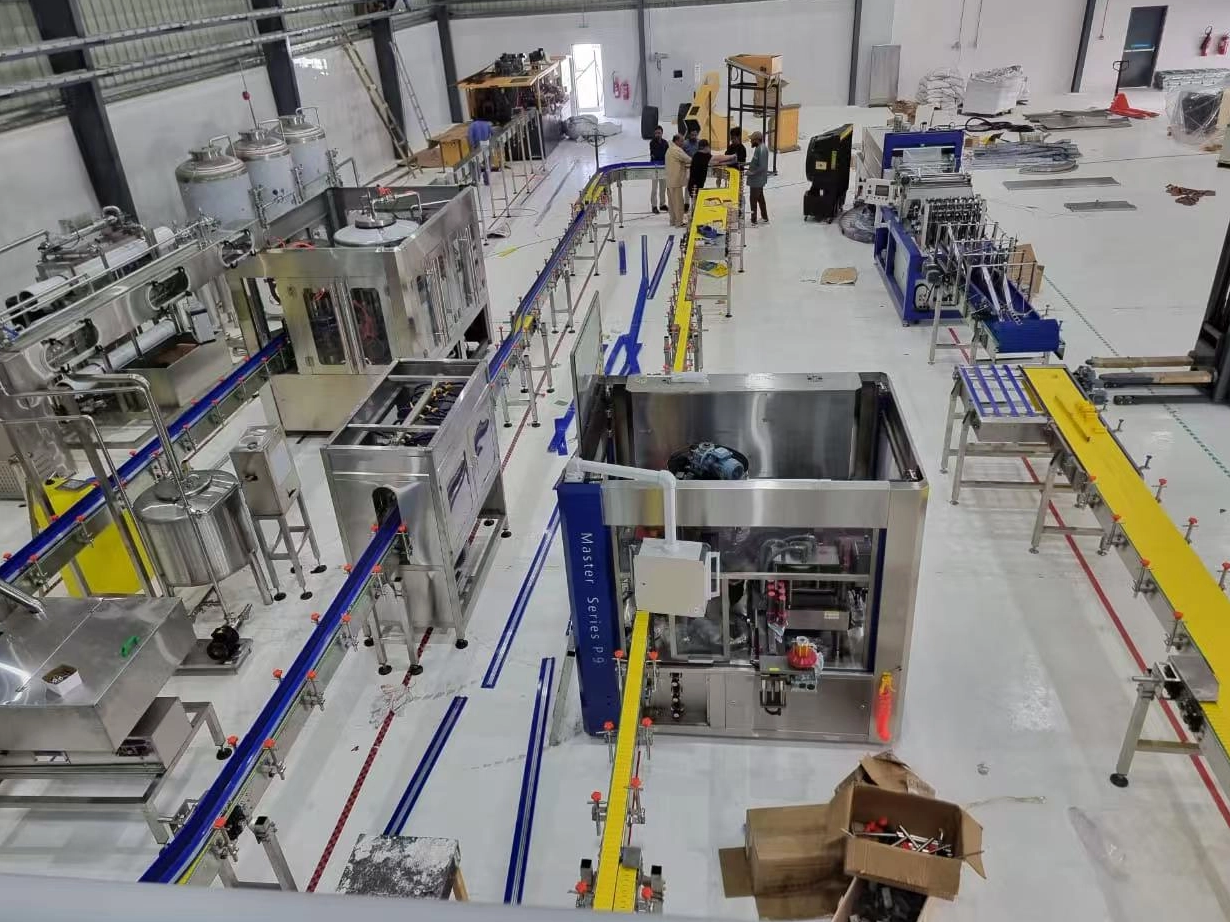
The filling line is usually the largest machinery investment. Choosing a reliable water filling machine manufacturer is essential because filling accuracy, production stability, and low maintenance costs directly protect your bottom line.
A complete modern bottling line integrates:
PET Bottle Blowing Machine: Converts plastic preforms into fully formed bottles via precise heating and high-pressure air blowing.
Air Compressor System: Supplies high-pressure air for blowing and low-pressure pneumatic air for the valves.
Automatic Water Filling Machine (Monoblock): Integrates bottle rinsing, liquid filling, and cap sealing into a single sanitized enclosure.
Labeling Machine: Applies sticker, sleeve, or OPP hot-melt labels.
Detailed Breakdown: What Equipment Is Needed for a Bottled Water Plant?
The complexity of your machinery depends directly on your target output:
Capacity
Suitable Business Type
Automation Level
2,000 BPH
Startup Plants / Boutique Local Brands
Semi-Automatic to Low Automation
6,000 BPH
Regional Brands / Established Distributors
Fully Automatic Monoblock Systems
12,000 BPH
Commercial Production / Supermarket Suppliers
High-Speed, Fully Automated Lines
24,000 BPH+
Large Industrial Plants / Multi-National Level
Continuous High-Speed Production
Investors seeking a turnkey water bottling plant solutionshould ensure all equipment is designed as an integrated production system rather than sourced separately from multiple suppliers. This prevents synchronization issues during commissioning.
The Modern Turnkey Bottling Plant Process Workflow
For an entrepreneur entering the industry, understanding how these industrial machines interconnect is key. A food-grade water factory operates as a single synchronized ecosystem:
Water Purification System: Continuous Flow Processing.
Raw water passes through quartz sand and activated carbon filters to strip organic compounds, sediments, and chlorine. It then hits a water softener to protect downstream machinery before passing through a heavy-duty Reverse Osmosis (RO) system to extract 99% of dissolved solids. A dual-stage Ozone and UV system finishes the process with terminal stabilization.
High-Speed Bottle Formation: Synchronized Line Feed.
Raw plastic PET preforms are fed into an infrared heating oven. The semi-molten preforms move directly into the blow mold where highly compressed air instantly stretches and expands them into finished, lightweight bottles. Air conveyors automatically sweep them directly onto the filling line.
The newly blown bottles enter the monoblock starwheels. They are inverted and blasted with sterile water rinsers, flipped upright for precise micro-level liquid filling, and capped immediately via automated magnetic capping heads. The entire chamber operates under continuous positive pressure to maintain absolute sterility.
Filled bottles pass a laser coding station to etch expiration dates before hitting a high-speed OPP hot-melt or sleeve labeling machine. The labeled bottles are grouped, channeled into a PE film shrink-wrapping machine to form 6/12/24 packs, and seamlessly routed to an automatic palletizing system for rapid warehouse transport.
Groundwater vs. Municipal Water: Which Water Source Is Better?
Choosing the right water source is one of the most important decisions when planning a bottled water factory. Many investors focus entirely on machinery while overlooking water availability.
Groundwater (Drilled Wells)
Advantages: Exceptionally low long-term operating costs, absolute control over supply volume, and less dependence on public utility failures.
Challenges: Requires rigorous CONAGUA approval.
⚠️ Critical 2026 Legal Insight: Due to tightening national water regulations in Mexico, obtaining a brand-new well drilling permit from CONAGUA is incredibly difficult. The standard practice for modern industrial investors is to acquire or lease existing water rights (Transferencia de Derechos de Agua) from agricultural or older industrial concessions. This must be handled carefully during the early due diligence stage.
Municipal Water (Local Utilities)
Advantages: Faster project startup process, much lower initial capital investment, and simplified pipeline infrastructure.
Challenges: Higher ongoing utility bills, vulnerability to regional municipal water shortages, and potential volume restrictions during dry seasons.
Comparison Table
Factor
Groundwater
Municipal Water
Startup Cost
High
Low
Operating Cost
Low
Medium to High
Permit Complexity
High (CONAGUA Rights Transfer Required)
Low
Long-Term Cost Trend
Lower over time
Higher over time
Supply Scalability
Excellent
Moderate
Licensing, Permits, and Compliance Requirements in Mexico
Operating outside of regulatory guidelines will result in severe fines or plant closures. A legally compliant water bottling plant requires approvals from several key Mexican authorities:
COFEPRIS Requirements
The Comisión Federal para la Protección contra Riesgos Sanitarios (COFEPRIS) oversees food and beverage safety.
Facility Registration: An Aviso de Funcionamiento must be officially active before commercial rollout.
Sanitary Specifications: Strict enforcement of NOM-201-SSA1-2015 (governing bottled water and ice quality parameters). COFEPRIS audits inspect water quality as well as mandatory physical layouts—including positive-pressure air management in the filling room and documented DC-3 training certificates for workers handling food-grade lines.
Commercial Labeling: Products must align perfectly with NOM-051-SCFI/SSA1-2010 front-of-pack nutritional markings and commercial compliance protocols.
CONAGUA Water Permits
The Comisión Nacional del Agua (CONAGUA) regulates industrial water usage.
You must secure a legal water extraction concession or a verified water rights transfer if utilizing well systems.
Requires regular digital meter tracking and reporting of total water volumes consumed.
Laboratory Testing
Regular third-party certified laboratory testing is legally required to verify the complete absence of microbiological contamination (coliforms, pseudomonas) and trace heavy metals, ensuring consumer safety.
Monthly Operating Costs (OPEX)
Understanding recurring operational expenses is critical when estimating true profit margins and cash flow requirements.
2026 Macroeconomic Alert: In line with Mexico's mandated 13% daily minimum wage adjustment implemented on January 1, 2026 ($315.04 MXN daily baseline / $440.87 MXN northern border zone), labor budgets must be tracked carefully. High-power machinery—specifically high-pressure bottle blowing air compressors and process chillers—are the biggest drivers of industrial electrical bills. Investing in modern, variable-frequency drive (VFD) electronic automation can lower power consumption by up to 22%.
Packaging Represents the Largest Cost
Raw packaging materials (PET preforms, caps, labels, shrink film) typically account for 40% to 60% of total ongoing production costs. Optimizing your supply chain for preforms and negotiating long-term purchasing agreements is the fastest way to shield your brand from plastic raw material volatility.
PET Bottles vs. Garrafón Water: Which Is More Profitable?
Factor
PET Bottles
Garrafón (19L/20L)
Packaging Cost
High (Per liter produced)
Extremely Low (Reused up to 50+ times)
Customer Retention
Medium (Brand switching is common)
High (Loyal route delivery clients)
Distribution Method
Supermarkets, Retail, Convenience Stores
Direct-to-Home, Offices, Industrial Parks
Cash Flow Stability
Medium (Seasonal fluctuations)
High (Constant residential baseline consumption)
ROI Potential
Good
Excellent
Because both models complement each other perfectly, successful Mexican water companies rarely choose one over the other; they run hybrid facilities that utilize both lines to capture maximum market share across residential and retail sectors.
Water Bottling Plant ROI Analysis
For well-managed projects in Mexico, the annual return on investment (ROI) typically ranges between 30% and 50%, allowing for fast capital recovery.
Small Plant Example
Investment: $200,000
Daily Output: 10,000 Bottles
Monthly Net Profit: $8,000 - $12,000
Estimated Payback Period: 20 - 30 Months
Medium Plant Example
Investment: $500,000
Daily Output: 30,000 Bottles
Monthly Net Profit: $20,000 - $35,000
Estimated Payback Period: 18 - 24 Months
Large Plant Example
Investment: $1,000,000+
Daily Output: 100,000+ Bottles
Monthly Net Profit: $50,000 - $100,000+
Estimated Payback Period: 18 - 24 Months
Why Some Water Plants Fail Within the First Three Years
To secure your investment, avoid these five common pitfalls that derail new factories:
No Pre-Established Distribution Network: Having world-class machinery is meaningless if you haven't secured commercial contracts or delivery routes beforehand.
Incorrect Plant Sizing: Buying an oversized, multi-million dollar line before testing regional demand leads to devastating idle-capacity costs.
Poor Water Source Planning: Purchasing equipment before securing legal water access from CONAGUA or verifying well chemical properties can leave a plant stranded without raw materials.
Underestimating Packaging Expenses: Failing to factor in the cash flow needed to purchase bulk preforms and caps upfront before clients pay their invoices.
Choosing Machinery Based Only on the Lowest Price: Cheap, unbranded equipment results in excessive downtime, poor filling accuracy, and lack of available spare parts in Mexico.
Turnkey Solutions with Nancheng Machinery
As an experienced water filling machine manufacturer, Nancheng Machinery supplies complete, integrated bottled water production lines designed to minimize project risk and accelerate production startup.
Rather than sourcing standalone machines from disjointed vendors, Nancheng provides turnkey systems that encompass:
Comprehensive engineering design and food-grade factory layout planning.
Water treatment systems, automatic PET blow molding machines, and high-precision monoblock rinsing-filling-capping lines.
Downstream automated labeling, shrink wrapping, and palletizing equipment.
On-site installation, commissioning, and comprehensive operator training by specialized technicians.
By partnering with an experienced global supplier capable of supporting the entire project lifecycle, investors can significantly reduce technical risks and ensure full operational efficiency from day one.
Frequently Asked Questions
1: How much does it cost to start a small water bottling plant in Mexico?
A small water bottling plant in Mexico typically requires an investment of USD 150,000 to USD 300,000, depending on production capacity, automation level, factory location, and packaging requirements. Startup projects producing 500–2,000 bottles per hour usually have the lowest entry costs and are ideal for local bottled water brands and regional distributors.
2: Is the bottled water business profitable in Mexico?
Yes. Mexico has one of the highest bottled water consumption rates in the world. Many operators achieve attractive profit margins through a combination of PET bottled water sales and recurring 19L Garrafón water delivery services. A well-managed water bottling plant can often achieve a return on investment (ROI) within 2–5 years.
3: What equipment is required for a complete water bottling plant?
A complete bottled water production line typically includes:
Water treatment system (RO, UV, ozone)
PET bottle blowing machine
Automatic water filling machine
Labeling machine
Shrink wrapping or carton packing machine
Air compressor system
Conveying and palletizing equipment
Choosing a turnkey solution from an experienced manufacturer can simplify installation and reduce startup risks.
4: What is the most profitable bottled water business model in Mexico?
Many successful Mexican entrepreneurs combine PET bottled water production with 20L Garrafón water distribution. While PET bottles provide strong retail sales opportunities, Garrafón delivery services generate recurring weekly revenue and higher customer retention rates, creating a more stable cash flow.
5: How much does a water treatment system cost for a bottled water factory?
The cost of an industrial water treatment system generally ranges from USD 30,000 to USD 150,000, depending on raw water quality, production capacity, and purification requirements. Most systems include quartz sand filtration, activated carbon filtration, water softening, reverse osmosis, UV sterilization, and ozone disinfection.
6: What permits are needed to open a bottled water plant in Mexico?
Most water bottling projects require approvals related to water use, food safety, sanitation, and business registration. Investors should pay particular attention to compliance with COFEPRIS regulations, drinking water standards, and local municipal requirements before beginning commercial production.
7: What production capacity should a new investor choose?
For first-time investors, a 3,000–8,000 BPH fully automatic water bottling line is often the most practical choice. It offers a balance between investment cost, production efficiency, and future expansion potential. Larger capacities are generally recommended only when stable distribution channels have already been established.
8: How can I reduce the overall cost of building a water bottling plant?
The most effective ways to reduce investment costs include:
Selecting the appropriate production capacity
Using a turnkey production line from one supplier
Starting with a single bottle size before expanding
Choosing a factory location with lower land and labor costs
Optimizing bottle design to reduce PET consumption
Conclusion
Starting a bottled water plant in Mexico remains one of the most attractive beverage investment opportunities in 2026. With strong consumer demand, growing health awareness, and stable consumption patterns, the market continues to offer significant opportunities for entrepreneurs and investors alike.
Success depends on selecting the right production capacity, securing a reliable water source, understanding regulatory requirements, controlling operating costs, and building strong distribution channels. Whether you are launching a small startup facility or a fully automated industrial operation, partnering with experienced suppliers and planning carefully from the beginning can significantly improve profitability and reduce investment risk.
 English
 العربية
 Français
 Русский
 Español
 Português
 Deutsch
 italiano
 Nederlands
 Tiếng Việt
 ไทย
ไทย Polski
 Türkçe
 አማርኛ
አማርኛ Bahasa Melayu
 Filipino
 Bahasa Indonesia
 magyar
 Română
 Čeština
 Монгол
 қазақ
қазақ Српски
 हिन्दी
 فارسی
فارسی Kiswahili
 Slovenčina
 Slovenščina
 Norsk
Norsk Svenska
 українська
 Suomi
Suomi Հայերեն
 Dansk
Dansk اردو
اردو Shqip
Shqip বাংলা
বাংলা Hrvatski
 Eesti keel
 සිංහල
සිංහල नेपाली
 Oʻzbekcha
 latviešu
 Azərbaycan dili
 Български
 ქართული
 Hausa
Hausa Igbo
Igbo Lietuvių
 Soomaali
 Yorùbá