You are here:Home » News » Top 15 Carbonated Beverage Filling Machine Manufacturers in Sri Lanka
Top 15 Carbonated Beverage Filling Machine Manufacturers in Sri Lanka
Views: 0 Author: Site Editor Publish Time: 2026-11-12 Origin: Site
Establishing a carbonated beverage production facility in Sri Lanka involves considerably more than the procurement of a filling machine. Whether the intended output is cola, sparkling water, flavored soda, or a carbonated energy drink, the production system as a whole must be engineered to preserve dissolved CO₂ levels, suppress foaming during transfer and filling, achieve consistent fill volumes across all containers, and ensure reliable sealing integrity throughout the packaging process.
Supplier selection therefore emerges as a critical determinant of long-term operational success. Equipment engineered for still water or non-carbonated juices is inherently unsuited to pressurized carbonated products; the associated differences in filling valve geometry, headspace pressure regulation, product temperature control, container mechanical strength, and downstream packaging throughput all exert direct influence over line efficiency and final product quality.
The Sri Lankan beverage machinery landscape comprises local equipment fabricators, importers, and engineering service providers, alongside international OEMs from China, Italy, and Germany that supply purpose-built isobaric filling machinery and complete turnkey bottling lines.
This guide provides an overview of 15 carbonated beverage filling machine manufacturers and suppliers operating within the Sri Lankan market, with particular attention to their respective equipment capabilities and the broader engineering considerations relevant to the development of a commercially viable soda bottling plant.
Carbonated Beverage Filling Machine Suppliers in Sri Lanka: Quick Overview
The Sri Lankan market includes manufacturers of general liquid filling equipment, local suppliers of bottling and canning machinery, and international companies specializing in counter-pressure filling technology.
Among the companies covered, Nancheng Machinery, AVE Technologies, GAI, Krones, and KHS offer specialized beverage filling equipment. Local companies such as CMC Engineering, Interpack, Unipack Technology Services, FoodTech Sri Lanka, and TTC Lanka provide relevant equipment sourcing or engineering services.
Other Sri Lankan companies manufacture or distribute conventional liquid filling machinery and supporting processing systems.
These distinctions matter because a supplier's ability to provide filling equipment does not necessarily mean it manufactures dedicated isobaric filling valves.
Top 15 Carbonated Beverage Filling Machine Manufacturers and Suppliers
Company
Location
Verified Equipment Focus
Nancheng Machinery
China
Carbonated Filling and Turnkey Lines
Brawo Engineers
Sri Lanka
Water and Dairy Filling Machines
ISF Industries
Sri Lanka
Food Processing and Filling Equipment
CMC Engineering
Sri Lanka
Bottling and Canning Plants
Interpack
Sri Lanka
Turnkey Beverage Bottling
Westmann Engineering
Sri Lanka
Industrial Engineering and Packaging
Pasan Enterprises
Sri Lanka
General Liquid Filling and Capping
Sun-Ai Lanka
Sri Lanka
Water Treatment and Beverage Bottling
Unipack Technology Services
Sri Lanka
Beverage Can Filling and Seaming
FoodTech Sri Lanka
Sri Lanka
CSD Bottling and Beverage Processing
TTC Lanka
Sri Lanka
Carbonation and PET Filling Equipment
AVE Technologies
Italy
Electronic Isobaric Filling
GAI
Italy
Bottling and Canning Machinery
Krones
Germany
Industrial CSD Filling Systems
KHS
Germany
CSD Filling and Packaging Lines
The table includes both equipment manufacturers and companies supplying machinery manufactured by third parties.
Top 15 Carbonated Beverage Filling Machine Manufacturers in Sri Lanka
1. Nancheng Machinery
Nancheng Machinery is a beverage filling equipment manufacturer based in Zhangjiagang, Jiangsu Province, China. The company designs and supplies automatic filling machines and complete production lines for carbonated soft drinks, bottled water, juice, beer, and other beverages.
Its equipment portfolio includes water treatment, beverage preparation, bottle blowing, rinsing-filling-capping monoblocks, aluminum can filling and seaming, labeling, conveying, and secondary packaging.
For investors developing soda bottling facilities in Sri Lanka, Nancheng Machinery provides equipment configurations based on beverage characteristics, container specifications, required production capacity, and factory layout.
Isobaric Filling Technology
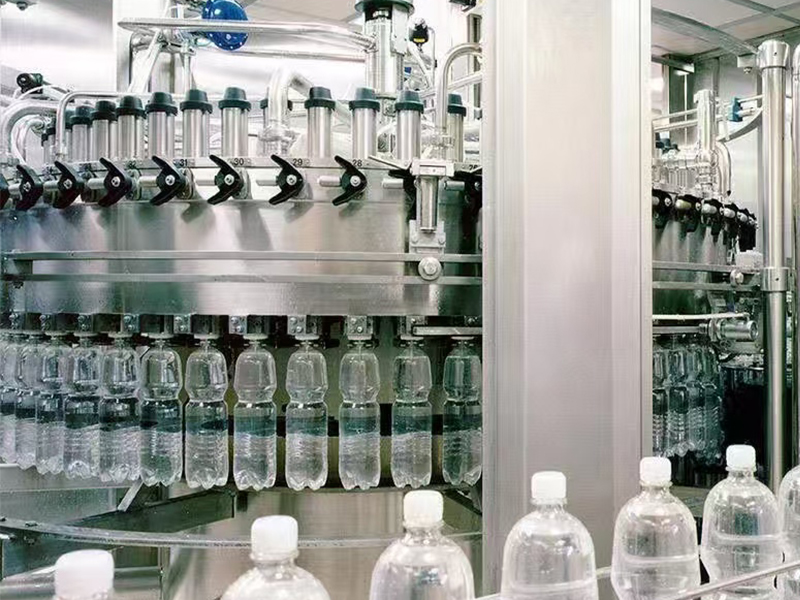
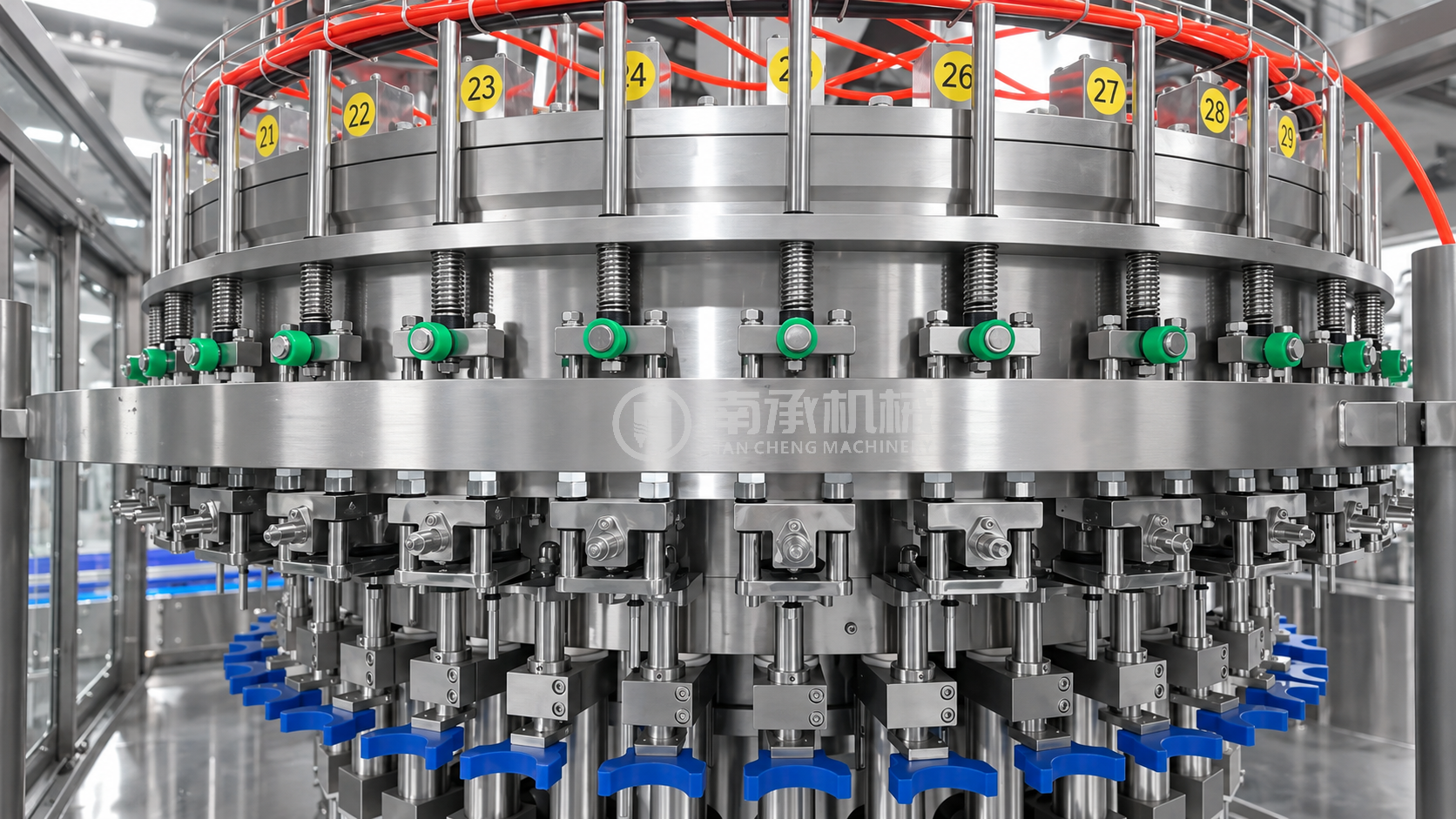
Nancheng's carbonated beverage filling machine range is designed for pressure-controlled filling of carbonated beverages into suitable PET bottles, glass bottles, and aluminum cans.
In a typical isobaric filling cycle, the container is sealed against the filling valve and pressurized before beverage transfer. Once the appropriate pressure conditions are established, the filling valve opens and the carbonated liquid enters the container.
Controlled filling and depressurization help limit excessive foaming and carbonation loss.
Depending on the selected model, the filling system may use mechanical valve control, semi-electronic control, or electronic filling technology. These configurations should be evaluated individually because valve actuation, filling measurement, and pressure control are not identical across models.
PET bottle filling equipment can incorporate neck handling, automatic bottle transfer, PLC control, and touchscreen operation. Glass bottle and aluminum can applications require different container handling and closure systems.
Complete Carbonated Beverage Production Line Engineering
Nancheng Machinery can integrate water treatment, sugar dissolving, syrup preparation, beverage blending, chilling, carbonation, bottle production, isobaric filling, capping, inspection, labeling, and final packaging.
The carbonation system must deliver beverages with consistent temperature, composition, and dissolved CO₂ content to the filling machine. Unstable carbonation or product temperature can cause excessive foam formation even when the filler operates correctly.
On the packaging side, conveyors, labelers, coding machines, and packing equipment must be selected to support the required finished-product output.
A properly engineered line therefore considers equipment synchronization, accumulation capacity, cleaning access, and maintenance requirements rather than only the nominal speed of the filler.
Engineering Design and Project Support
Nancheng Machinery supports customers with machine selection, production line planning, factory layout development, equipment manufacturing, commissioning assistance, operator training, and after-sales technical services.
For Sri Lankan beverage projects, engineering discussions should cover raw water characteristics, bottle or can specifications, production capacity, electrical supply, compressed air, cooling, CO₂ supply, drainage, and available factory space.
Before manufacturing begins, buyers should establish the contractual equipment scope and agree on appropriate Factory Acceptance Test procedures.
A complete quotation should specify the guaranteed operating conditions, included equipment, utility requirements, and technical documentation.
Manufacturers planning a new soda plant can contact Nancheng Machinery to discuss filling machine specifications and customized turnkey beverage factory solutions.
2. Brawo Engineers
Brawo Engineers is a Sri Lankan machinery manufacturer based in Pelmadulla. Its published product range includes water bottling machines, dairy filling and sealing equipment, jam filling machines, and ice packet packaging systems.
The company develops equipment for specific filling and packaging operations, including machinery adapted to customer requirements.
Its water bottling equipment is relevant to manufacturers developing non-carbonated liquid packaging operations.
From an engineering perspective, however, ordinary water bottling and carbonated beverage filling require different operating conditions.
A carbonated filler needs suitable pressure containment, container sealing at the filling valve, pressure equalization, and controlled pressure release. These features are not established merely by the presence of a water filling system.
Brawo Engineers is therefore a relevant local liquid filling manufacturer, while buyers requiring soda filling equipment should verify the availability of dedicated pressure-filling technology.
Its product information is available through the Brawo Engineers website.
3. ISF Industries
ISF Industries is an industrial machinery manufacturer with a production facility in Peliyagoda, Sri Lanka, and manufacturing operations in India.
The company's publicly documented equipment includes Fillmatic filling machines, stainless steel tanks, conveyors, pasteurizers, and food processing machinery.
Its Fillmatic systems include rotary cup and cone filling equipment, particularly for dairy and ice cream applications. Published configurations include PLC and HMI controls, servo-assisted filling arrangements, and different production capacities.
These details demonstrate actual filling-machine design and manufacturing capabilities, but they should not be confused with carbonated beverage filling technology.
Dairy cup filling and CSD bottle filling involve different operating pressures, valve designs, and packaging requirements.
For beverage factory engineering, ISF Industries may be relevant to tanks, conveyors, processing equipment, or suitable liquid filling applications.
Its official product range provides information about the company's machinery and manufacturing capabilities.
4. CMC Engineering
CMC Engineering Export GmbH operates in Sri Lanka as part of the Melchers Group, supplying industrial machinery, technical products, and related engineering services.
Its beverage equipment portfolio includes bottling and canning plants, automatic bottling equipment, bottle washing and rinsing machinery, capping systems, and labeling equipment.
These machine categories form essential parts of a beverage packaging line.
For a carbonated soft drink project, the main engineering challenge is ensuring that the selected filling machine is suitable for the product's carbonation level and packaging format.
If the project uses PET bottles, the filling and capping system must maintain appropriate pressure conditions without deforming the container. Aluminum cans require compatible filling equipment and precise double-seaming technology.
CMC Engineering's role as an equipment supplier makes it relevant to machinery sourcing and project coordination.
Its bottling and canning equipment portfolio provides a starting point for evaluating available systems.
5. Interpack (Pvt) Ltd
Interpack is a Sri Lankan packaging solutions provider established in 1988 and operating under IWS Holdings.
The company provides processing and packaging machinery through equipment sourcing and turnkey project services.
Its documented portfolio includes complete beverage processing and bottling projects, fully automated glass bottle filling, PET bottling with blow molding, and aseptic packaging systems.
This is particularly relevant to investors developing complete beverage factories, where the project scope extends beyond an individual filling machine.
A PET carbonated beverage line requires coordination between bottle production, container conveying, pressure filling, capping, and packaging equipment.
The original equipment manufacturer, line integrator, and installation contractor may have different responsibilities.
Before purchasing a turnkey system, buyers should identify which company guarantees filling performance, final line output, equipment synchronization, and after-sales service.
Interpack's beverage engineering activities are described through its IWS Holdings company profile.
6. Westmann Engineering
Westmann Engineering is included among Sri Lankan industrial machinery and engineering suppliers relevant to production and packaging equipment.
For beverage projects, the key consideration is the specific machinery and technical services available under a proposed contract rather than the general category of equipment represented by the supplier.
A packaging engineering supplier may provide conveyors, production coding, machine integration, or other supporting systems without manufacturing the main filling machine.
These services can still be important to overall line performance.
For example, poor conveyor synchronization between a filler and labeler can cause frequent accumulation, machine interruptions, and reduced finished-product output.
When evaluating Westmann Engineering, buyers should request current product catalogs, manufacturer information, installation references, and documented beverage packaging experience.
Any claim of dedicated isobaric filling machine manufacturing should be supported by actual model specifications and test records.
Additional company information can be requested through Westmann Engineering.
7. Pasan Enterprises
Pasan Enterprises is a Sri Lankan packaging machinery supplier based in Kesbewa.
Its product catalog includes liquid filling machines, piston fillers, magnetic pump filling equipment, paste filling machines, and related sealing and packaging systems.
One published double-head liquid filling machine supports a nominal filling range of 100–1,000 mL and uses stainless steel construction.
Such equipment is relevant to suitable low-viscosity liquids, but its filling principle differs from an industrial isobaric soda filler.
A conventional pump or piston filling system may deliver consistent volumes under atmospheric conditions. It does not automatically provide the pressure equalization required for carbonated beverages.
Buyers should therefore distinguish between general liquid filling accuracy and carbonation-compatible pressure filling.
Pasan Enterprises is particularly relevant to smaller packaging operations and supporting machinery.
Its equipment can be examined through the Pasan Enterprises machinery catalog.
8. Sun-Ai Lanka
Sun-Ai Lanka provides engineering, equipment sourcing, and turnkey project services for water treatment, bottling, and industrial processing applications.
The company describes capabilities in the design, engineering, installation, and delivery of water treatment systems and beverage filling and packing machinery.
It also sources equipment from international machinery manufacturers.
For carbonated beverage production, water treatment is an important part of the upstream process.
Raw water characteristics influence filtration requirements, reverse osmosis design, mineral balance, and final beverage consistency.
A complete project may also require treated water storage, hygienic transfer pumps, syrup preparation, cooling, and carbonation equipment.
Sun-Ai Lanka can be evaluated for water treatment and beverage bottling project engineering.
The available filling machine technology, equipment origin, and pressure-filling specifications should be established during technical quotation review.
The company's activities are described on the Sun-Ai Lanka website.
9. Unipack Technology Services
Unipack Technology Services is a Sri Lankan industrial machinery supplier with a published range of automatic filling and packaging equipment.
Its product catalog includes automatic canning machines described for carbonated beverages, beer, energy drinks, and other beverage products.
The listed equipment includes models with different filling and seaming configurations, making the company directly relevant to aluminum can packaging projects.
However, buyers should examine the technical data carefully.
A canning line must coordinate container feeding, filling pressure, foam management, lid placement, and double-seam formation.
The finished can must meet the specified filling quantity and seam integrity requirements.
A reliable purchasing evaluation should include inspection of seaming rolls, chuck specifications, can-end compatibility, filling valve design, and rejection systems.
Published production speeds should also be verified through an agreed performance test using the intended can format.
Unipack's automatic canning machine product page provides an example of its equipment offering.
10. FoodTech Sri Lanka
FoodTech Sri Lanka, operating as Food Tech Solutions (Pvt) Ltd, supplies food and beverage processing machinery and provides related engineering services.
Its beverage equipment portfolio includes blending tanks, pasteurizers, UHT systems, glass bottle filling machinery for still and carbonated soft drinks, and beverage canning lines.
The company also provides process plant design, equipment importation, installation, and technical consultation.
These capabilities are relevant to beverage manufacturers developing complete production systems.
For carbonated soft drink processing, the blending and carbonation stages must deliver stable product conditions to the filler.
Pressure fluctuations, inconsistent beverage temperature, or incorrect syrup-water mixing can affect carbonation retention and fill consistency.
The selected equipment should also allow proper cleaning and maintenance access.
FoodTech is a machinery supplier and process engineering provider; buyers should identify the original manufacturer of any imported filling system.
Its beverage processing equipment page outlines the relevant machinery categories.
11. TTC Lanka (Pvt) Ltd
TTC Lanka operates beverage manufacturing and industrial machinery trading activities in Sri Lanka.
Its machinery import and trading division lists PET filling lines, carbonation and mixing systems, capping machines, labeling equipment, and bottle blow molding machinery.
The company also describes carbonated beverage manufacturing under its own beverage business.
This combination of beverage production activity and equipment trading gives the company practical relevance to machinery procurement.
For an industrial soda bottling plant, equipment selection should begin with the intended product characteristics and container specifications.
The carbonation equipment must provide a controlled product supply, while the filling machine must maintain the pressure conditions required to limit excessive foaming.
When sourcing machinery through TTC Lanka, buyers should verify the original equipment manufacturer, approved drawings, performance specifications, installation responsibilities, and spare parts arrangements.
Further details are available from its machinery import and trading division.
12. AVE Technologies
AVE Technologies is an Italian filling machinery manufacturer specializing in bottling equipment and automated filling systems.
Its ISO-EFS electronic isobaric filling technology is designed for carbonated drinks, including sparkling water, carbonated soft drinks, and beer.
The system uses controlled container pressurization and filling vessel pressure balancing before beverage transfer.
Depressurization is then managed to reduce foaming and product overflow.
AVE also offers filling-capping monoblocks and rinsing-filling-capping configurations, with options for integrating beverage premixing equipment.
This is a direct example of specialized pressure filling technology, rather than a general-purpose liquid filling system.
For equipment selection, buyers should evaluate the filling control principle, supported container dimensions, production speed, product temperature range, and CIP arrangement.
The company's electronic isobaric filling system provides a technical reference.
13. GAI Macchine Imbottigliatrici
GAI is an Italian manufacturer of bottling and packaging machinery serving beverage producers.
Its equipment portfolio includes bottling monoblocks, filling and capping systems, labeling machinery, and canning equipment.
GAI's machinery is relevant to breweries, wineries, and beverage producers requiring integrated filling and packaging operations.
For carbonated beverages, the selected machine must provide filling technology compatible with the beverage's dissolved CO₂ content and the intended container.
Bottle and can applications should be evaluated separately because they involve different handling, pressure management, and closure requirements.
Buyers should request product-specific technical documents identifying the filling valve system, operating conditions, supported containers, and production capacity.
More information about its bottling machinery is available from GAI.
14. Krones AG
Krones is a German manufacturer of beverage processing, filling, and packaging machinery.
Its equipment portfolio includes industrial filling systems, PET bottle blowing, beverage preparation, labeling, inspection, and complete line automation.
For carbonated soft drinks, Krones offers both bottle and can filling technologies.
The Modulfill HES is designed for glass bottle applications involving products such as beer, carbonated soft drinks, and water.
Its filling technology can be adjusted according to the product and required filling conditions.
Krones also offers the Modulfill VFS-C volumetric can filler, which uses flowmeter-based filling volume measurement.
The machine's filling and gas-handling systems are designed for controlled beverage transfer and consistent filling performance.
These technologies illustrate an important engineering distinction: filling level control and measured volumetric filling are different approaches, each requiring suitable validation.
Krones equipment is particularly relevant to larger production facilities requiring integrated processing, filling, inspection, and packaging systems.
Technical information is available through Krones.
15. KHS GmbH
KHS is a German filling and packaging machinery manufacturer supplying complete production systems for water, beer, carbonated soft drinks, and other beverages.
Its carbonated beverage portfolio includes PET bottling systems, glass bottle filling equipment, aluminum can fillers, and complete packaging lines.
KHS offers industrial can filling systems with different filling principles and production capacities.
Its equipment can be integrated with beverage mixing and carbonation systems, pasteurization, inspection, packaging, and palletizing.
For soda manufacturing, stable product preparation is as important as the filling machine itself.
A carbonation system must maintain consistent dissolved CO₂ and product composition, while the filling process must avoid unnecessary gas breakout.
KHS also provides integrated solutions for multi-shift industrial production, where equipment availability, changeover requirements, and maintenance accessibility influence overall line efficiency.
The company's carbonated soft drink filling systems demonstrate its industrial CSD machinery capabilities.
How Does a Carbonated Beverage Filling Machine Work?
A carbonated beverage filling machine operates under controlled pressure conditions to reduce CO₂ loss during packaging.
The exact sequence depends on the filling valve type and container format, but a typical industrial filling process includes several coordinated stages.
Container Feeding and Positioning
Empty bottles or cans enter the filling machine through synchronized conveyors and transfer mechanisms.
PET bottles may use neck-handling systems, while glass bottles typically require suitable base support. Aluminum cans are handled according to their diameter, height, and structural characteristics.
Accurate positioning is necessary to establish a reliable seal between the container and filling valve.
Pressure Equalization
Before filling begins, the machine establishes suitable pressure conditions inside the container.
Pressure equalization reduces the pressure difference between the product tank and container, allowing the beverage to enter with less turbulence.
Poor pressure control can increase foaming and product overflow.
Controlled Beverage Filling
Once the required conditions are established, the filling valve opens.
The beverage enters the container while the machine controls liquid flow, displaced gas, and filling termination.
Depending on the equipment design, the process may use return-gas tubes, filling level control, or electronic volumetric measurement.
These different technologies should not be treated as identical.
Depressurization and Sealing
After the filling valve closes, the machine reduces container pressure according to the required process sequence.
PET and glass bottles are transferred to compatible capping equipment. Aluminum cans enter the lid feeding and seaming system.
The sealing operation must maintain container integrity and prevent leakage during handling, storage, and transportation.
Engineering Requirements for a Complete Carbonated Beverage Production Line
The performance of a soda bottling factory depends on the integration of several processing and packaging systems.
Process Section
Main Equipment
Engineering Consideration
Water Preparation
Filtration, RO, Storage
Raw Water Quality and Flow
Syrup Preparation
Dissolving and Mixing Tanks
Brix and Ingredient Control
Beverage Mixing
Proportioning System
Recipe Consistency
Cooling
Chiller and Heat Exchanger
Product Temperature
Carbonation
Carbonator
Dissolved CO₂ Stability
Container Preparation
Blow Molder or Depalletizer
Container Supply
Filling
Isobaric Filler
Pressure and Foam Control
Closure
Capper or Seamer
Closure Integrity
Inspection
Fill-Level and Leak Inspection
Defect Detection
Packaging
Labeler, Packer, Palletizer
Finished-Product Output
Product Temperature and Carbonation Control
CO₂ solubility is strongly affected by beverage temperature and pressure.
When product temperature increases, maintaining the required carbonation level generally becomes more difficult.
For this reason, the carbonation system, cooling equipment, transfer piping, and filling machine should be engineered as one connected process.
The allowable filling temperature must be defined for the actual beverage formulation and carbonation target.
Bottle and Can Compatibility
PET bottles must be suitable for the required internal pressure.
Glass bottles require appropriate handling, inspection, and closure systems.
Aluminum cans need correct can-end specifications and properly adjusted double-seaming equipment.
Container drawings should be approved before selecting change parts and transfer mechanisms.
Equipment Synchronization and Accumulation
The rated capacity of the filler is not necessarily the output of the complete production line.
If the labeler or packaging machine stops repeatedly, bottles can accumulate and eventually force the filler to stop.
Suitable conveyor controls, accumulation space, and downstream capacity are important for maintaining production continuity.
How to Select a Carbonated Beverage Filling Machine Supplier in Sri Lanka
The purchasing process should start with technical requirements rather than a comparison of equipment prices alone.
Confirm the Product and Container Specifications
Suppliers should receive sufficient information about the beverage formula, CO₂ level, Brix, temperature, container volume, dimensions, and closure type.
Without these details, it is difficult to verify whether a proposed filling machine can operate under the required conditions.
Compare Filling Valve Technology
Mechanical, semi-electronic, and electronic filling systems may provide different levels of process control and monitoring.
Buyers should examine the actual valve arrangement, pressure control method, filling measurement system, and cleaning design.
The supplier should explain how the machine maintains filling consistency and controls foaming.
Review the Equipment Scope
A complete production line quotation should identify the included processing, filling, conveying, inspection, and packaging equipment.
The proposal should also define the boundary between supplier-provided equipment and customer-provided utilities.
Water, compressed air, electricity, CO₂ supply, cooling, and drainage responsibilities should be documented.
Evaluate Maintenance and Spare Parts
Maintenance accessibility, standardization of components, availability of wear parts, and control system documentation affect long-term equipment reliability.
For imported machinery, customers should confirm the availability of technical support, recommended spare parts, and troubleshooting assistance.
Factory Acceptance Test Checklist for Carbonated Beverage Filling Machines
A Factory Acceptance Test should verify that the equipment meets agreed technical specifications before shipment.
For carbonated beverage machinery, visual inspection alone is not sufficient.
Test Item
Engineering Verification
Filling Capacity
Sustained Output Under Agreed Conditions
Filling Accuracy
Fill Volume or Level Consistency
CO₂ Retention
Carbonation Before and After Filling
Product Temperature
Stability During Production
Filling Pressure
Pressure Control and Equalization
Foam Formation
Overflow and Product Loss
Bottle Handling
Jamming and Container Damage
Closure Integrity
Cap Torque or Double-Seam Quality
PLC and Safety
Alarm Logic, Interlocks and Emergency Stops
CIP System
Cleaning Circuit and Valve Accessibility
Equipment Documents
Drawings, Manuals and Parts Lists
Line Integration
Conveyor and Downstream Coordination
The test procedure should define the product, container format, run duration, acceptance limits, and measurement methods.
When actual carbonated product testing is not available at the supplier's factory, the agreement should identify which tests can be completed during FAT and which must be verified during Site Acceptance Testing.
A successful FAT does not replace commissioning and performance verification after installation.
Frequently Asked Questions
What Is a Carbonated Beverage Filling Machine?
A carbonated beverage filling machine is equipment used to fill soda, sparkling water, and other carbonated drinks into bottles or cans under controlled pressure conditions.
Are There Carbonated Beverage Equipment Suppliers in Sri Lanka?
Yes. Sri Lanka has industrial equipment companies supplying beverage bottling, canning, filling, packaging, and supporting processing equipment. Their capabilities range from general liquid filling to specialized carbonated beverage machinery sourcing.
Which Filling Technology Is Used for Carbonated Soft Drinks?
Isobaric or counter-pressure filling is commonly used to control pressure during filling and reduce excessive foaming and CO₂ loss.
Can One Machine Fill Different Bottle Sizes?
Yes, when the machine supports multiple container formats. Guide adjustments or change parts may be necessary.
Can a Production Line Fill PET Bottles and Aluminum Cans?
A manufacturer may offer both solutions, but PET bottle filling and can filling generally require different container handling and sealing configurations.
What Capacity Should a New Soda Factory Choose?
Capacity depends on expected sales, operating hours, container size, line efficiency, and future expansion plans.
Do International Manufacturers Supply Beverage Equipment to Sri Lanka?
International manufacturers may supply equipment through export projects, distributors, or engineering contracts. Buyers should confirm delivery, commissioning, spare parts, and technical support directly.
How Much Does a Carbonated Beverage Production Line Cost?
The cost depends on capacity, automation, container format, carbonation equipment, and total project scope. A customized quotation is required for an accurate estimate.
Conclusion
Choosing a carbonated beverage filling machine supplier in Sri Lanka requires careful evaluation of equipment technology, manufacturing capabilities, engineering support, and project scope.
Local companies provide access to liquid filling machinery, beverage processing equipment, packaging systems, and machinery sourcing services. International manufacturers offer specialized isobaric filling technology and integrated carbonated beverage production lines.
For manufacturers planning a new soda, sparkling water, or carbonated energy drink factory, the most important considerations are stable carbonation control, suitable filling technology, reliable container sealing, and consistent finished-product output.
Nancheng Machinery supplies carbonated beverage filling machines and complete turnkey production lines covering beverage preparation, filling, and packaging.
 English
 العربية
 Français
 Русский
 Español
 Português
 Deutsch
 italiano
 Nederlands
 Tiếng Việt
 ไทย
 Polski
 Türkçe
 አማርኛ
 Bahasa Melayu
 Filipino
 Bahasa Indonesia
 magyar
 Română
 Čeština
 Монгол
 қазақ
 Српски
 हिन्दी
 فارسی
 Kiswahili
 Slovenčina
 Slovenščina
 Norsk
 Svenska
 українська
 Suomi
 Հայերեն
 Dansk
 اردو
 Shqip
 বাংলা
 Hrvatski
 Eesti keel
 සිංහල
 नेपाली
 Oʻzbekcha
 latviešu
 Azərbaycan dili
 Български
 ქართული
 Hausa
 Igbo
 Lietuvių
 Soomaali
 Yorùbá