Introduction: Is Bottled Water Still a Profitable Business in Morocco?
Morocco remains one of the most active bottled water markets in North Africa. In 2026, rising urban populations, a strong tourism industry, and growing concerns about tap water quality continue to fuel demand for packaged drinking water. However, profitability is no longer guaranteed simply by entering the market. Investors must carefully calculate total investment cost, operating expenses, and realistic return on investment (ROI) before committing capital.
This guide is written for entrepreneurs, factory owners, and investors who want a clear, realistic, and Morocco-specific understanding of how much it truly costs to build and operate a water bottling plant—and how to design a project that makes financial sense.
1. Overview of the Bottled Water Market in Morocco
Morocco’s bottled water market is characterized by:
Strong demand for small and medium bottle sizes
High competition in 500ml and 1.5L segments
Increasing consumption of 5L bottles for households
Price-sensitive consumers outside major cities
While national brands dominate supermarket shelves, there is still room for regional brands and cost-efficient producers, especially in secondary cities and local distribution networks.
For an overview of local industry players and suppliers, you may refer to this page on water bottling machine manufacturers in Morocco.
2. Water Source & Water Quality Risk in Morocco
Common Water Sources
Compared with some Sub-Saharan African countries, Morocco generally has better water infrastructure, but water quality still varies significantly by region.
Typical water sources include:
Groundwater (deep wells): Most common option; moderate mineral content
Spring water: Strong branding potential but strict approval process
Municipal water: Reliable supply but higher operating cost
Water Quality Risks
Key water quality challenges in Morocco may include:
High TDS in certain regions
Seasonal variation in mineral composition
Risk of nitrate contamination in agricultural zones
These factors directly affect water treatment system cost and long-term operating stability. A professional raw water analysis is mandatory before finalizing equipment selection.
3. Electricity & Energy Cost Considerations
Energy cost is a critical factor in Morocco’s water bottling economics.
Power Supply Characteristics
Grid power is generally stable in industrial zones
Voltage standards typically support industrial bottling lines
Backup generators are recommended but not always mandatory
Energy Cost Impact
Electricity costs in Morocco are higher than in some African markets but lower than in many European countries. Major power consumers include:
Optimizing equipment efficiency and selecting the right production capacity can significantly reduce long-term operating expenses.
4. Mainstream Bottle Sizes & Packaging Preferences
Understanding local bottle preferences is essential for cost control and sales success.
Popular Bottle Sizes in Morocco
500ml: High-volume, low-margin, supermarket-driven
1.5L: Core household consumption size
5L: Growing demand for family and office use
Large-format bottles (10L–19L) exist but are less dominant than in some West African markets.
Packaging choices such as lightweight bottles, OPP labels, and shrink-wrapped packs are commonly used to control unit cost.
5. Recommended Production Capacity for New Investors
Choosing the right capacity is one of the most important investment decisions.
Typical Capacity Ranges
3,000–4,000 BPH: Entry-level, local distribution
5,000–6,000 BPH: Regional brands, balanced investment
8,000–12,000 BPH: National competition, higher capital requirement
For first-time investors in Morocco, a 4,000–6,000 BPH line is often the safest starting point.
6. Water Bottling Plant Investment Cost Breakdown (2026)
Below is a typical investment cost structure for a mid-scale water bottling plantin Morocco (reference capacity: 5,000 BPH, 500ml–1.5L).
Estimated Investment Cost Table
Cost Item | Estimated Range (USD) |
Water treatment system | 35,000 – 60,000 |
Bottle blowing machine | 40,000 – 80,000 |
Water filling machine (rinse-fill-cap) | 45,000 – 90,000 |
Labeling machine | 15,000 – 35,000 |
Shrink wrapping / cartoning | 18,000 – 40,000 |
Air compressor & utilities | 15,000 – 30,000 |
Installation & commissioning | 8,000 – 15,000 |
Total Estimated Equipment Investment | 176,000 – 350,000 |
Note: Costs vary based on automation level, bottle types, and local conditions.
7. Operating Costs to Consider
Beyond equipment investment, investors must calculate monthly operating costs:
Electricity consumption
Water source extraction or purchase
Bottle preforms, caps, labels, shrink film
Labor and maintenance
Spare parts and consumables
Packaging materials typically represent the largest recurring cost, often exceeding energy and labor expenses combined.
8. ROI Analysis: How Long to Recover the Investment?
ROI depends on sales price, distribution efficiency, and production utilization.
Typical ROI Scenario (Indicative)
In many Moroccan projects, investment recovery within 18–36 months is achievable with stable sales and cost control.
9. Choosing the Right Equipment Partner
Selecting the right supplier directly affects both investment cost and long-term profitability.
Why Investors Choose Nancheng Machinery
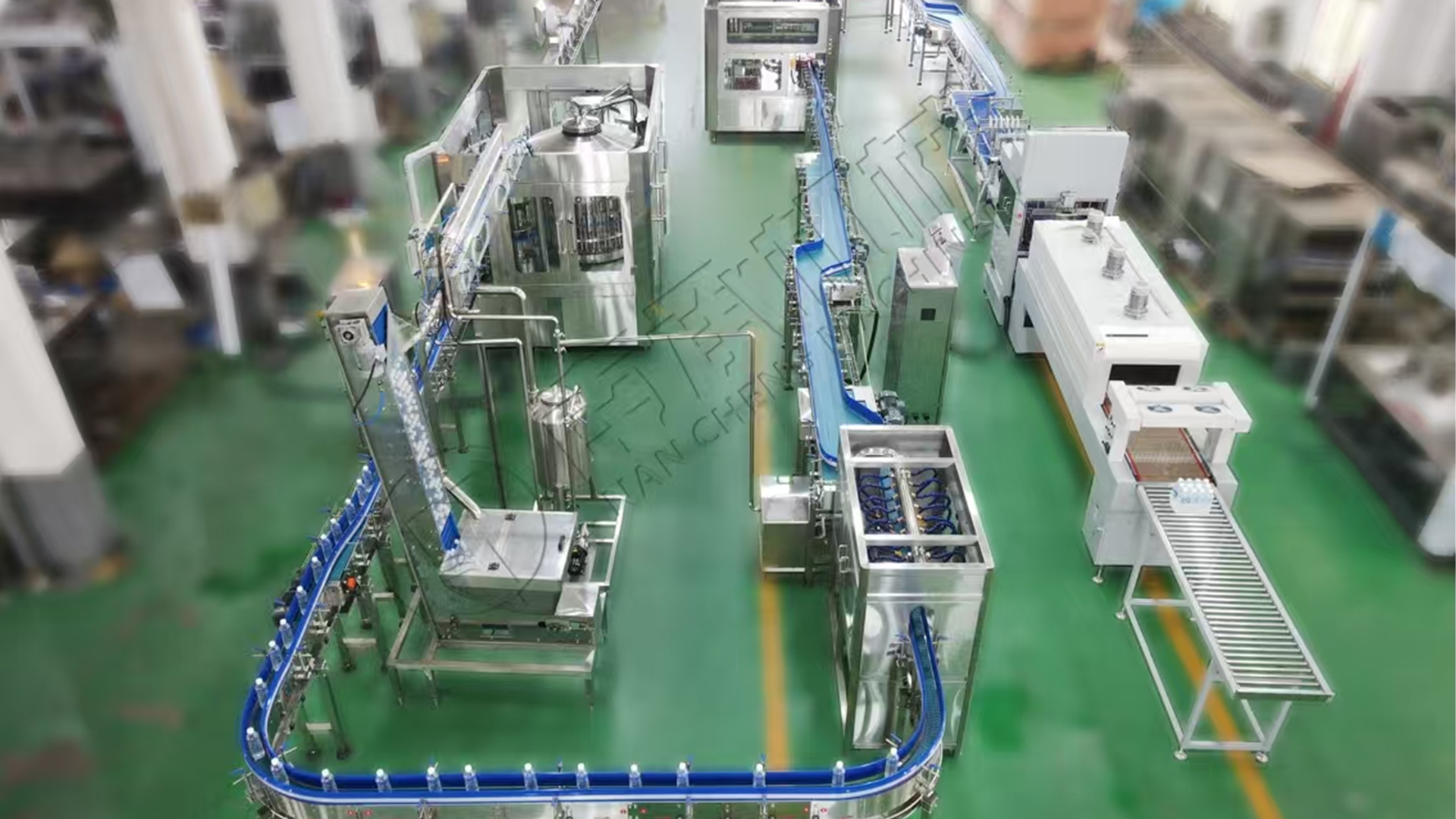
Nancheng Machinery specializes in complete water bottling plant solutions tailored for African and Middle Eastern markets.
Key strengths include:
Customized water treatment design based on Moroccan water quality
Reliable, food-grade equipment with stable output
Competitive pricing with long-term spare parts support
Turnkey service from layout design to commissioning
A well-designed water bottling plant from an experienced manufacturer reduces hidden costs and operational risks.
10. From Cost Planning to Project Execution
Cost estimation is only the first step. Successful investors align:
For a complete step-by-step project roadmap, you can also read the Guide to Building a Water Bottling Plant in Morocco.
Final Conclusion: Smart Investment Beats Low Initial Cost
In Morocco’s competitive bottled water market, the cheapest plant is rarely the most profitable. Smart investors focus on balanced capacity, efficient equipment, and long-term operating stability.
With realistic budgeting and the right technical partner, building a water bottling plant in Morocco in 2026 can still deliver strong and sustainable returns.
If you are planning your project and need a tailored cost estimate or feasibility analysis, contacting an experienced manufacturer like Nancheng Machinery is the first step toward a successful investment.
 English
 العربية
 Français
 Русский
 Español
 Português
 Deutsch
 italiano
 Nederlands
 Tiếng Việt
 ไทย
ไทย Polski
 Türkçe
 አማርኛ
አማርኛ Bahasa Melayu
 Filipino
 Bahasa Indonesia
 magyar
 Română
 Čeština
 Монгол
 қазақ
қазақ Српски
 हिन्दी
 فارسی
فارسی Kiswahili
 Slovenčina
 Slovenščina
 Norsk
Norsk Svenska
 українська
 Suomi
Suomi Հայերեն
 Dansk
Dansk اردو
اردو Shqip
Shqip বাংলা
বাংলা Hrvatski
 Eesti keel
 සිංහල
සිංහල नेपाली
 Oʻzbekcha
 latviešu
 Azərbaycan dili
 Български
 ქართული
 Hausa
Hausa Igbo
Igbo Lietuvių
 Soomaali
 Yorùbá


