Nigeria’s beverage market is expanding fast. From sparkling water to flavored sodas, demand for carbonated drinks keeps climbing year after year. If you’re planning to enter or upgrade in this space, choosing the right carbonated beverage filling machine manufacturer can make or break your project.
But here’s the challenge: with so many equipment suppliers worldwide, how do you know which ones truly fit the Nigerian market?
In this practical 2026 guide, we’ll walk through the top manufacturers serving Nigeria, what makes them stand out, and how to choose the right partner for your production goals. Whether you’re building a new plant or expanding an existing one, this guide will help you move forward with confidence.
Understanding Nigeria’s Carbonated Beverage Market
Before diving into suppliers, it’s worth asking: why is Nigeria such an attractive market for carbonated drink investment?
Several factors are driving growth:
Rapid urban population growth
Rising demand for affordable packaged beverages
Expansion of local bottling brands
Increasing investment in PET bottle production
Many Nigerian investors are shifting from small semi-automatic setups to fully automated carbonated beverage production line systems. This shift means equipment reliability, energy efficiency, and after-sales support are more important than ever.
If your project targets 2,000–18,000 BPH, you’re right in the sweet spot of current market demand.
How to Choose the Right Filling Machine Manufacturer
Let’s be honest — not every supplier who claims experience in soda filling truly understands carbonated beverages.
When evaluating a carbonated beverage filling machine, Nigerian buyers typically focus on:
Pressure Filling Stability
Carbonated drinks require isobaric filling. Poor pressure control leads to:
Excess foaming
Inconsistent fill levels
CO₂ loss
A qualified supplier must demonstrate stable counter-pressure technology.
Bottle Compatibility
Most Nigerian plants run:
Flexibility matters, especially if you plan to expand product lines later.
Local Support and Spare Parts
This is where many projects run into trouble. Always ask:
Is remote support available?
Are wear parts standard or custom?
Is the PLC internationally supported?
With those criteria in mind, let’s explore the leading manufacturers.
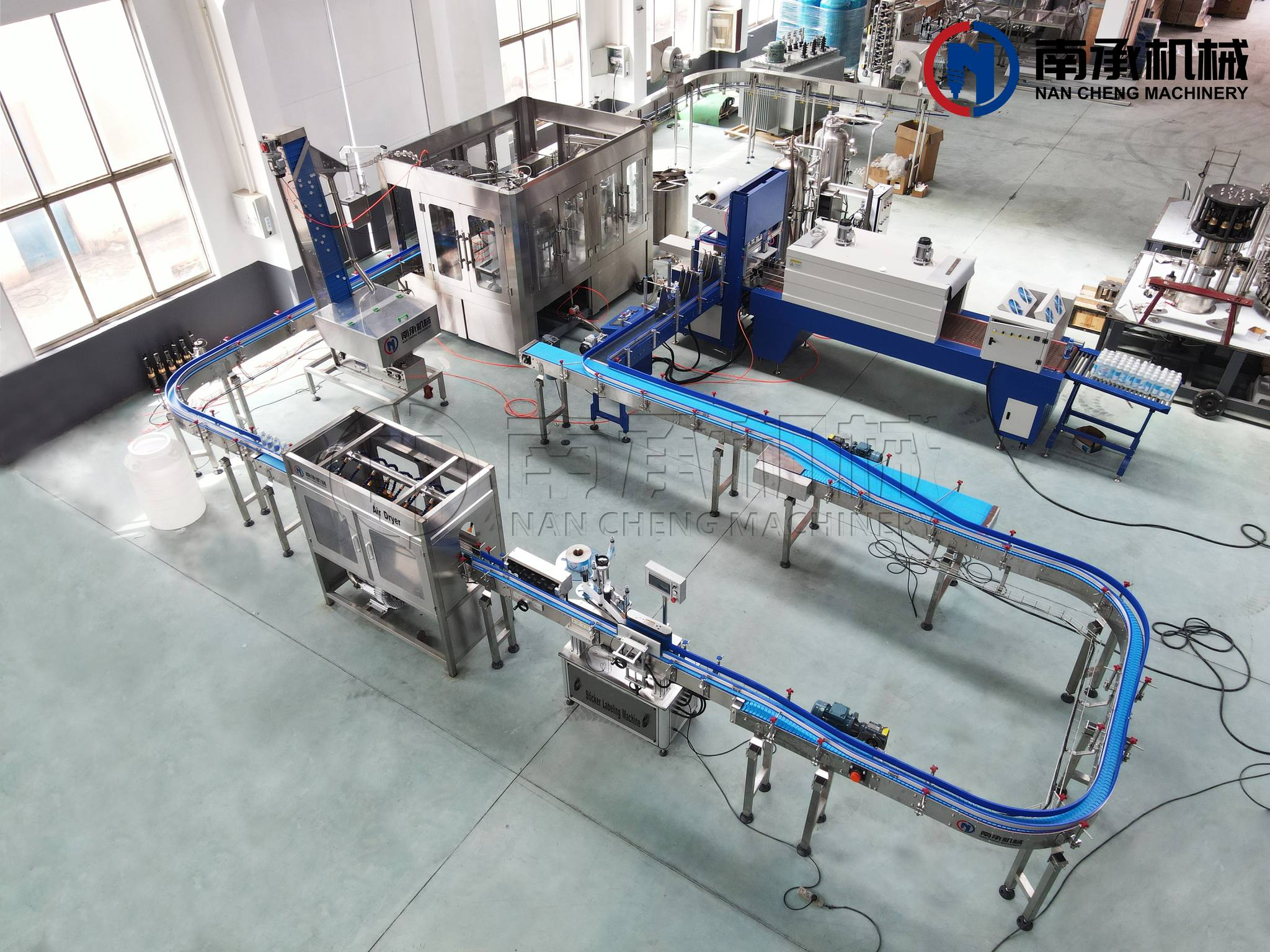
Top 10 Carbonated Beverage Filling Machine Manufacturers Serving Nigeria
1. Nancheng Machinery
When Nigerian beverage investors look for a balance of technology, affordability, and turnkey capability, Nancheng Machinery consistently appears on the shortlist.
Founded in China with over a decade of specialization in liquid packaging, the company has built a strong reputation across Africa, the Middle East, and Southeast Asia.
What makes Nancheng stand out in the Nigerian market is its focus on complete solutions rather than standalone machines. Their systems typically integrate:
For buyers seeking a scalable carbonated beverage filling machine line, this integrated approach reduces compatibility risks during installation.
Key strengths
Strong experience in medium-speed PET soda lines
Competitive investment cost for new factories
Flexible configurations from small to large capacity
Remote technical support capability
Growing installation base in Africa
Another advantage is their engineering focus on pressure-balanced filling valves, which helps minimize foaming — a common challenge in Nigeria’s warm climate.
If you’re planning a new soda plant and want a reliable carbonated beverage production line, Nancheng is often considered a practical starting point.
2. Krones AG
Germany-based Krones is one of the most recognized names in global beverage packaging. Their high-speed lines are widely used by multinational beverage companies.
Typical positioning
Premium fully automatic systems
High-speed industrial plants
Large multinational bottlers
While highly advanced, the investment level is typically suited to large-scale operations rather than emerging local brands.
3. Sidel Group
Sidel is another major global player known for PET expertise and integrated beverage solutions.
Their carbonated filling systems are often selected by:
Sidel’s strength lies in complete line engineering and advanced blowing-filling integration technologies.
4. KHS Group
KHS has a long history in beverage filling technology, particularly in glass bottle and can applications.
In Nigeria, their equipment is typically seen in:
Their isobaric filling systems are known for precision but usually come with a higher capital investment.
5. Sacmi Beverage Division
Sacmi offers a broad range of beverage equipment with strong engineering roots in Europe.
They are often considered by companies that want:
Their systems are particularly respected in PET and closures technology.
6. GEA Group
GEA focuses heavily on process engineering and beverage technology, especially for complex beverage formulations.
Strength areas include:
Process integration
Hygienic design
Advanced control systems
Their solutions are commonly selected for technically demanding beverage projects.
7. IC Filling Systems
This Italian manufacturer is well known among small to medium beverage producers.
They are often chosen for:
For Nigerian entrepreneurs entering the soda market at moderate scale, IC Filling Systems can be an alternative option.
8. Serac Group
Serac specializes in filling and capping technologies across multiple liquid categories.
Their beverage solutions emphasize:
They are more commonly used in specialized packaging environments.
9. Coesia Group (Beverage Systems)
Coesia’s beverage equipment divisions provide automation-focused packaging solutions.
Their systems often appeal to manufacturers prioritizing:
Advanced automation
Integrated packaging
Smart factory concepts
Investment levels tend to align with higher-end industrial projects.
10. SMF Maschinenfabrik
SMF is recognized for PET-related machinery and bottle production systems.
Their equipment is typically used by companies that want:
Strong PET bottle expertise
Blowing and filling integration
European engineering approach
They often appear in projects where preform and bottle control are key priorities.
What Capacity Is Most Popular in Nigeria?
If you’re wondering what Nigerian investors actually buy, here’s the practical reality.
Most new entrants choose:
2,000–6,000 BPH for startup plants
8,000–12,000 BPH for growing regional brands
18,000+ BPH for major bottlers
PET bottle lines dominate the market due to lower packaging cost and easier distribution.
This is why many investors start with a modular carbonated beverage filling machine that can be upgraded later.
PET vs Glass: What Nigerian Buyers Prefer
In today’s Nigerian market:
PET bottles
Lower cost
Lighter transport
Higher demand in retail
Faster line speeds
Glass bottles
For most new projects, PET remains the safer commercial choice.
Common Mistakes Nigerian Buyers Should Avoid
After supporting many African projects, several patterns appear repeatedly.
Underestimating water quality
Carbonated drinks require stable water treatment. Skipping proper filtration often causes long-term quality issues.
Choosing purely on price
The cheapest machine often leads to:
Valve instability
Spare part delays
Difficult commissioning
Ignoring future expansion
Many plants outgrow their first line within 2–3 years. Choosing a scalable carbonated beverage production line can save significant reinvestment later.
Final Thoughts
Nigeria remains one of Africa’s most promising markets for carbonated beverage investment in 2026 and beyond. Demand is strong, distribution networks are expanding, and local brands continue to emerge.
The key to success is not simply buying a machine — it’s choosing the right long-term equipment partner.
If your goal is to launch or expand efficiently, focus on suppliers that understand:
Isobaric filling stability
PET bottle dominance in West Africa
Real-world operating conditions in Nigeria
Reliable remote technical support
By taking a structured approach and evaluating manufacturers carefully, you’ll be in a strong position to build a profitable and scalable soda production business.
 English
 العربية
 Français
 Русский
 Español
 Português
 Deutsch
 italiano
 Nederlands
 Tiếng Việt
 ไทย
ไทย Polski
 Türkçe
 አማርኛ
አማርኛ Bahasa Melayu
 Filipino
 Bahasa Indonesia
 magyar
 Română
 Čeština
 Монгол
 қазақ
қазақ Српски
 हिन्दी
 فارسی
فارسی Kiswahili
 Slovenčina
 Slovenščina
 Norsk
Norsk Svenska
 українська
 Suomi
Suomi Հայերեն
 Dansk
Dansk اردو
اردو Shqip
Shqip বাংলা
বাংলা Hrvatski
 Eesti keel
 සිංහල
සිංහල नेपाली
 Oʻzbekcha
 latviešu
 Azərbaycan dili
 Български
 ქართული
 Hausa
Hausa Igbo
Igbo Lietuvių
 Soomaali
 Yorùbá


