Starting a water bottling business in Kenya is no longer just an idea—it’s a real, scalable opportunity.
With rapid urbanization, a growing middle class, and increasing demand for safe, packaged drinking water, Kenya remains one of East Africa’s most promising markets for bottled water investment. Whether you’re a first-time entrepreneur or an experienced investor expanding into beverages, this guide will walk you from zero to production, step by step.
This is not a theoretical article. It is a practical roadmap—covering market research, licensing, equipment selection, costs, plant layout, and how to choose the right machinery partner to avoid expensive mistakes.
Why Invest in a Water Bottling Plant in Kenya?
Kenya’s bottled water market continues to grow due to several structural factors:
Urban population growth in Nairobi, Mombasa, Kisumu, Nakuru, and Eldoret
Inconsistent access to safe drinking water in many regions
Strong demand from offices, schools, hospitals, hotels, and retail chains
Relatively low entry barriers compared to other beverage sectors
Bottled water is a high-frequency, repeat-purchase product. Once distribution is established, cash flow can be stable and predictable.
For investors, the key is doing it right from the beginning—especially in licensing, water treatment design, and equipment selection.
Step 1: Understand the Kenyan Bottled Water Market
Before buying land or machines, you must understand what type of water business you are entering.
Common Bottled Water Types in Kenya
Purified drinking water (RO-treated)
Mineral water
Spring water
Sachet water (lower-end market)
PET bottles (0.3L, 0.5L, 1L, 1.5L)
5L and 10L family bottles
18.9L / 20L gallon bottles
Each category has different regulatory, equipment, and cost requirements.
Investor tip:
Most new investors start with RO-treated PET bottled water, as it offers:
Lower raw water risk
Easier quality control
Faster approval process

Step 2: Business Registration & Licensing in Kenya
This is a critical step. No machine should be purchased before licenses are clearly understood.
Key Licenses & Approvals Required
Company registration (Business Registration Service)
Water abstraction permit (Water Resources Authority – WRA)
County government trade license
Environmental Impact Assessment (NEMA)
Kenya Bureau of Standards (KEBS) certification
Public Health approval
Food safety compliance
Each approval has technical implications on plant layout, water treatment, and hygiene design.
Common mistake:
Investors often buy machines first, then discover the layout or process does not meet KEBS or Public Health requirements—leading to redesign and extra costs.
Step 3: Choose the Right Water Source
Your water source plays a decisive role in determining the water treatment system design, overall investment cost, and long-term operational stability of your bottling plant.
Common Water Sources in Kenya
Borehole water – the most common choice, but quality varies significantly by location
Municipal water – more stable, but with higher operating costs
Spring water – requires strict source protection and additional regulatory approval
Key Factors That Matter Most
TDS level and mineral composition
Bacterial contamination and heavy metals
Seasonal stability of water supply
Long-term sustainability and abstraction limits
Before finalizing any equipment or system configuration, a comprehensive water analysis is essential. Accurate test results ensure that the water treatment system is properly sized and correctly engineered—avoiding unnecessary oversizing that increases investment cost, or undersizing that leads to poor water quality and production interruptions.
Step 4: Design the Water Treatment System
Water treatment is the core of any water bottling plant. No matter how advanced the filling line is, product quality ultimately depends on the stability and reliability of the water treatment system.
Typical Components of a Purified Water System
Raw water storage tank
Multi-media sand filter for suspended solids removal
Activated carbon filter to eliminate chlorine, odor, and organic matter
Water softener (when hardness is high)
Reverse osmosis (RO) system for dissolved solids removal
UV sterilizer for final microbial control
Ozone system for continuous disinfection and shelf-life protection
Key Design Parameters
A properly engineered system must be tailored to:
Local water quality analysis results
Required treatment output (m³/hour)
Target bottling capacity (bottles per hour, BPH)
Why Professional System Design Matters
A professionally designed water treatment system helps to:
Lower long-term operating costs
Extend RO membrane service life
Maintain stable water quality
Reduce product rejection and compliance risks
This is where experienced suppliers truly make a difference—by designing treatment systems that are precisely matched to real production needs, rather than generic or oversized configurations.
Step 5: Select the Right Bottling Capacity
Choosing the correct bottling capacity is one of the most strategic decisions when building a water bottling plant in Kenya. Capacity affects not only equipment investment, but also operating costs, distribution pressure, and overall return on investment.
Typical Bottling Plant Capacities in Kenya
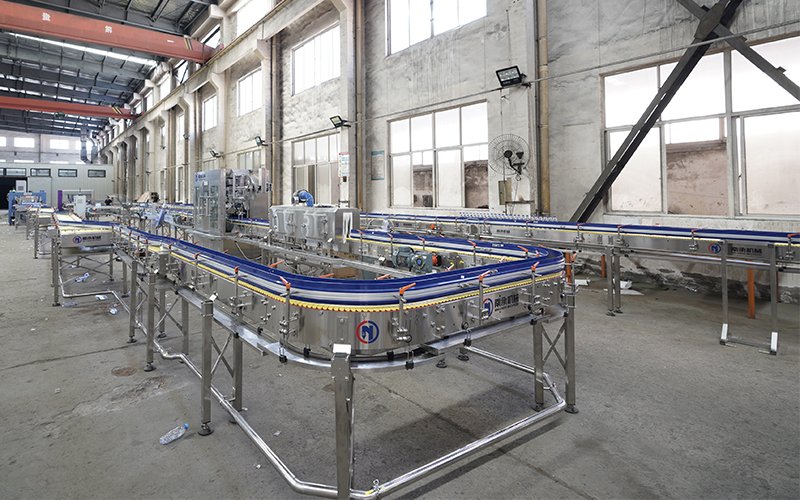
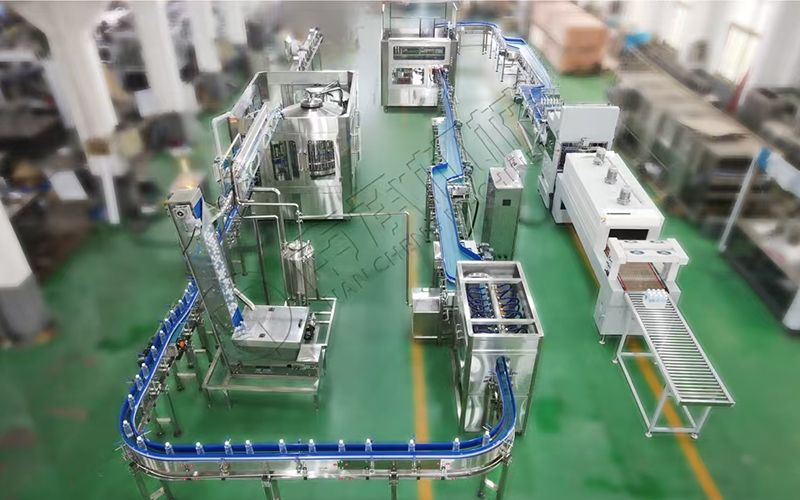
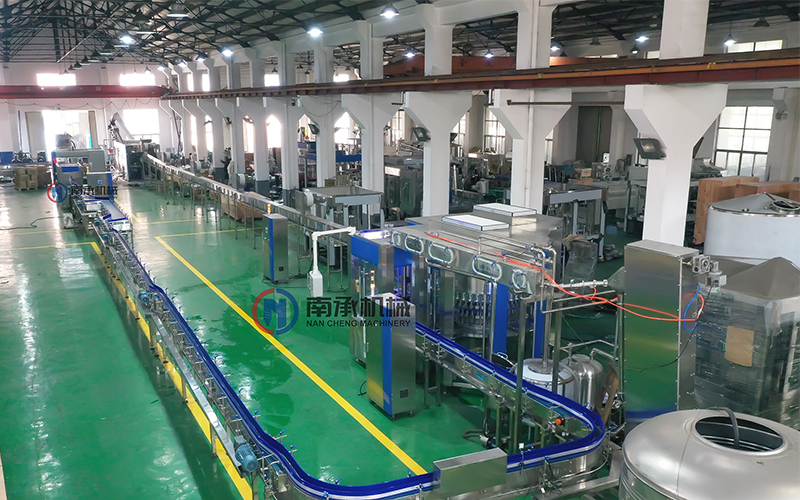
Investor Insight
Rather than starting with the largest possible line, investors are strongly advised to match initial capacity with actual market reach and distribution capability. In practice, a fully utilized 12,000 BPH bottling line often delivers higher profitability and faster payback than a 24,000 BPH line operating far below capacity.
A well-planned capacity also allows room for future expansion, enabling the plant to scale up gradually as brand recognition and sales volume grow.
Step 6: Core Equipment for a Water Bottling Plant
A complete water bottling plant is made up of several interconnected systems that must work together smoothly to ensure product quality, production efficiency, and long-term operational stability.
Main Equipment Required
Water treatment system to ensure consistent and compliant water quality
Bottle blowing machine (if bottles are produced in-house)
Bottle rinsing, filling, and capping system, which forms the core of the production line
Labeling machine for branding and product identification
Coding machine for date and batch traceability
Shrink wrapping or carton packing system for secondary packaging
Air compressor to support pneumatic equipment
Conveyors and auxiliary systems to ensure smooth material flow
At the center of the entire production process is the integrated solution provided by Nancheng Machinery, offering complete water bottling plant engineering—from water treatment and bottle formation to filling, packaging, and line integration.
For investors, working with a supplier that can deliver both standalone equipment and complete plant solutions significantly reduces coordination risk, shortens project timelines, and ensures better compatibility between systems.
When planning your equipment configuration, it is especially important to focus on:
These decisions directly affect production efficiency, operating costs, and long-term return on investment.
Step 7: Plant Layout & Workshop Design
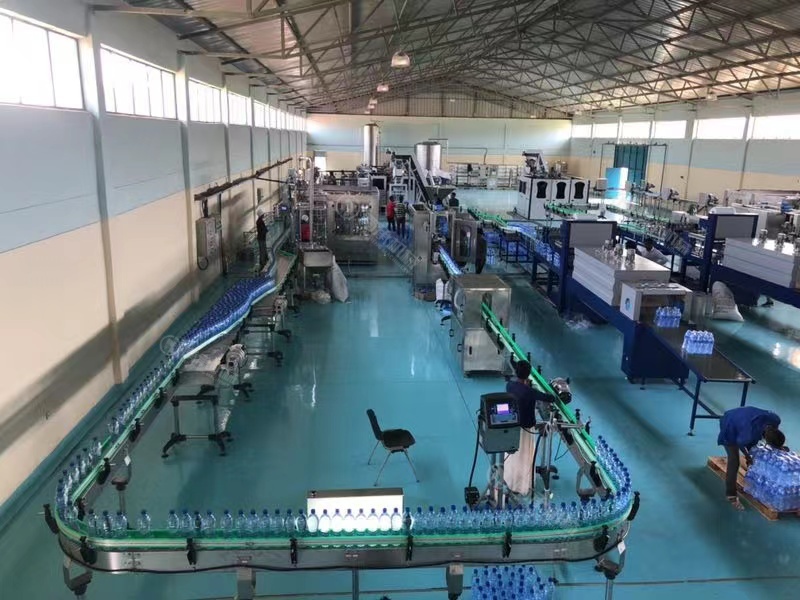
Plant layout is often underestimated, yet it has a direct and long-lasting impact on hygiene compliance, production efficiency, labor costs, and future expansion potential. A well-designed layout not only improves daily operations but also simplifies regulatory inspections and long-term scaling.
Key Impacts of Proper Plant Layout
Compliance with hygiene and food safety standards
Efficient workflow and reduced material handling
Lower labor requirements and operating costs
Flexibility for future capacity expansion
Basic Functional Zones in a Water Bottling Plant
Raw water treatment area
Clean filling room with controlled hygiene conditions
Packaging area for labeling and secondary packing
Finished goods storage for palletized products
Utilities area (air compressors, electrical systems, water supply)
Why Professional Layout Design Matters
A professionally engineered plant layout ensures:
One-way product flow, minimizing cross-contamination risk
Clear separation between clean and non-clean areas
Smooth compliance with health and safety inspections
By planning the layout at the early design stage, investors can avoid costly modifications later and ensure that the facility supports both current production needs and future growth.
Step 8: Decide on Your Bottle Production Strategy
Choosing the right bottle production strategy has a direct impact on operating costs, supply stability, and long-term profitability. Investors typically have two practical options when starting a water bottling plant in Kenya.
Option A: Purchase Pre-Made Bottles
Lower initial investment, ideal for early-stage operations
Higher long-term cost per bottle
Dependence on external bottle suppliers, which may affect supply stability
Option B: In-House Bottle Blowing
Higher initial investment, but stronger long-term cost control
Lower bottle cost per unit, especially at higher volumes
Better supply chain control and production flexibility
Higher long-term profit margins as production scales
In practice, most medium- and large-scale investors in Kenya choose to invest in in-house bottle blowing once sales volume stabilizes, as it significantly improves cost efficiency and reduces reliance on external suppliers.
A phased approach—starting with pre-made bottles and upgrading to in-house bottle blowing later—is also a common and effective strategy.
Step 9: Estimate Investment & Operating Costs
A clear and realistic cost structure is essential for building a profitable and sustainable water bottling plant. Investors should evaluate both initial capital investment and ongoing operating expenses before finalizing the project plan.
Initial Investment Components
Land and building (purchase or lease, construction or renovation)
Licensing and regulatory approvals
Machinery and installation, including water treatment and bottling line
Utilities setup (electricity, water, compressed air)
Packaging materials for initial production runs
Initial working capital to support early operations and distribution
Key Operating Costs
Electricity consumption
Water abstraction and treatment costs
Labor and factory staff
Bottle preforms or pre-made bottles
Caps, labels, and secondary packaging
Maintenance and spare parts
For investors who want a more detailed breakdown of capital requirements and operating expenses, this guide on water bottling plant cost in Kenya provides a clearer view of typical budget ranges and cost drivers in real projects.
Why Financial Modeling Matters
A well-prepared financial model enables investors to accurately estimate:
With realistic assumptions and proper cost control, investors can make informed decisions on plant scale, pricing strategy, and expansion planning—reducing financial risk and improving long-term profitability.
Step 10: Installation, Training & Commissioning
Once the equipment arrives at your factory, professional installation and commissioning are critical to ensure stable production from day one.
This stage typically includes:
Mechanical installation and line alignment
Electrical wiring and PLC configuration
Water treatment system commissioning
Filling accuracy calibration
Trial production and performance testing
Equally important is operator training. Well-trained staff can significantly reduce downtime, avoid operating errors, and extend machine service life. Training usually covers:
Daily operation procedures
Changeover and adjustment
Cleaning and sanitation
Basic troubleshooting and maintenance
For investors who want a smoother and faster start-up, working with a supplier that provides end-to-end technical support makes a major difference.
Companies like Nancheng Machinery offer complete turnkey services, covering plant layout design, equipment installation, commissioning, operator training, and long-term technical support under one integrated solution.
To better understand how a full-service approach can reduce project risk and shorten time to production, you can explore Nancheng Machinery’s
turnkey water bottling plant solution, which is designed to support investors from project planning all the way to stable commercial operation.
Step 11: Quality Control & Brand Positioning
Quality in a water bottling business is not defined by machines alone—it is built on consistency, discipline, and repeatability across every stage of production.
Key Quality Control Measures
Daily water quality testing to ensure compliance and safety
Filling volume checks to maintain accuracy and reduce product loss
Cap torque inspection to prevent leakage and contamination
Label placement and accuracy checks for brand integrity
Batch coding and traceability to support quality audits and recalls
Why Quality Drives Brand Value
In the bottled water market, consumer trust is everything. Consistent quality reinforces brand credibility, supports regulatory compliance, and helps products stand out in a competitive retail environment.
By implementing strong quality control systems from the beginning, investors can build a reliable, recognizable brand—one that supports sustainable growth and long-term market presence.
Why Equipment Supplier Choice Matters
At this stage, many investors begin comparing equipment suppliers.
If you are evaluating different options, this Top 10 Water Bottling Machine Manufacturers in Kenya guide can help you understand the strengths, service capabilities, and market focus of leading suppliers operating in the Kenyan market.
An experienced supplier provides:
Nancheng Machinery specializes in complete water bottling plant solutions, serving global markets with:
For investors entering the Kenyan market, this kind of partnership reduces risk and accelerates success.
Final Thoughts: From Idea to Profitable Water Plant
Building a water bottling plant in Kenya is not just about buying machines—it’s about strategy, compliance, and execution.
If you:
Understand the market
Choose the right capacity
Design the correct water treatment system
Work with an experienced machinery partner
You significantly increase your chances of building a profitable, scalable bottled water business.
For entrepreneurs and investors ready to move forward, professional guidance at the early planning stage can save months of preparation time and thousands of dollars in avoidable mistakes. A well-planned project not only reaches production faster, but also achieves a shorter payback period and stronger long-term returns.
Next Step for Investors
If you are planning a water bottling project in Kenya and want:
A tailored plant proposal
Equipment configuration advice
Budget estimation support
A complete solution provider like Nancheng Machinery can help you move from concept to production with confidence.
 English
 العربية
 Français
 Русский
 Español
 Português
 Deutsch
 italiano
 Nederlands
 Tiếng Việt
 ไทย
ไทย Polski
 Türkçe
 አማርኛ
አማርኛ Bahasa Melayu
 Filipino
 Bahasa Indonesia
 magyar
 Română
 Čeština
 Монгол
 қазақ
қазақ Српски
 हिन्दी
 فارسی
فارسی Kiswahili
 Slovenčina
 Slovenščina
 Norsk
Norsk Svenska
 українська
 Suomi
Suomi Հայերեն
 Dansk
Dansk اردو
اردو Shqip
Shqip বাংলা
বাংলা Hrvatski
 Eesti keel
 සිංහල
සිංහල नेपाली
 Oʻzbekcha
 latviešu
 Azərbaycan dili
 Български
 ქართული
 Hausa
Hausa Igbo
Igbo Lietuvių
 Soomaali
 Yorùbá


