You are here:Home » News » A Complete Guide To Building A Water Bottling Line in Brazil (2026)
A Complete Guide To Building A Water Bottling Line in Brazil (2026)
Views: 0 Author: Site Editor Publish Time: 2026-05-20 Origin: Site
Brazil is one of the largest and fastest-growing bottled water markets in Latin America. Rising health awareness, rapid urbanization, hot tropical climates, and increasing tourism consumption continue to drive strong demand for bottled drinking water across the country.
For entrepreneurs and investors, 2026 presents a major opportunity to enter Brazil’s booming beverage industry. However, building a successful bottled water factory requires far more than simply purchasing machines. Investors must understand ANVISA regulations, factory layout planning, packaging trends, water treatment systems, operating costs, and production automation.
This comprehensive guide explains everything you need to know about setting up a modern turnkey water bottling plant in Brazil — from equipment selection and production processes to investment costs and profitability analysis.
Why the Brazilian Bottled Water Market Is Growing Rapidly
Brazil has a population of more than 215 million people and one of the largest beverage consumption markets in the world. Due to concerns about water quality, increasing disposable income, and changing consumer habits, bottled water consumption continues to rise steadily.
Unlike many smaller Latin American countries, Brazil’s enormous geographic size creates strong regional demand. Transportation costs between states can be very high, which gives regional bottled water factories a significant competitive advantage.
Key Growth Drivers in 2026
Health-Conscious Consumers
Brazilian consumers are increasingly replacing sugary soft drinks with:
Purified water
Mineral water
Sparkling water
Functional beverages
Tourism & Hospitality Industry
Hotels, resorts, restaurants, and coastal tourism areas generate massive demand for:
330ml bottles
500ml PET bottles
Premium glass bottled water
Growth of Home Delivery Water
The Brazilian market has extremely strong demand for:
10L bottles
20L returnable gallon bottles (Galão)
This segment remains highly profitable for regional distributors.
How Brazil Differs from Other Latin American Bottled Water Markets
Factor
Brazil
Other Latin American Markets
Logistics Cost
Very High
Medium
Main Packaging
500ml + 20L Galão
Mostly PET bottles
Label Preference
OPP Wrap-around
Sleeve / Sticker
Climate
Tropical & Humid
Mixed
Regulatory Complexity
High
Medium
Market Size
Largest in LATAM
Smaller regional markets
Because of these unique conditions, investors must carefully optimize:
Factory location
Packaging style
Energy consumption
Logistics strategy
Step 1: Understand Brazilian Bottled Water Regulations
Regulatory compliance is one of the most important parts of building a water bottling plant in Brazil.
The industry is supervised by:
ANVISA (National Health Surveillance Agency)
Ministry of Health
ANM (National Mining Agency)
Local municipal authorities
ANVISA Requirements
Brazil has strict sanitary regulations for food and beverage production.
Investors must comply with:
Food-contact material standards
Microbiological safety standards
Factory sanitation regulations
Traceability requirements
Recent regulations such as RDC 717/2022 increased labeling and traceability requirements for packaged beverages.
Water Source Approval
The water source must undergo laboratory testing for:
pH value
TDS level
Mineral composition
Heavy metals
Microbiological safety
If producing natural mineral water (Água Mineral Natural), additional ANM approvals are required.
For purified drinking water projects, many factories use:
Municipal water
Deep well water
Reverse osmosis treatment systems
Labeling Requirements
Brazilian bottled water labels must usually include:
Portuguese language
Batch numbers
Expiration dates
Chemical composition
Sodium and mineral content
This makes reliable:
Laser coding systems
OPP labeling machines
Traceability systems
extremely important.
Step 2: Choose the Right Business Model & Production Capacity
Your investment depends heavily on your target market and production capacity.
Production speed is typically measured in: BPH (Bottles Per Hour)
Small Startup Water Plant
Suitable For:
Small local brands
Regional distributors
Entrepreneurs entering the market
Typical Capacity:
1000–3000 BPH
Common Products:
500ml PET bottles
1.5L bottles
20L gallon water
Recommended Equipment:
Semi-automatic bottle blowing
Small water filling machine
Basic shrink wrapping
Semi-automatic packing machine
Estimated Investment:
USD 50,000 – 150,000
Medium Commercial Water Factory
Suitable For:
Supermarket suppliers
OEM/private label production
Multi-city distribution
Typical Capacity:
4000–12000 BPH
Typical Configuration:
Fully automatic rotary blowing machine
3-in-1 Monoblock rinsing-filling-capping system
OPP labeling machine
Automatic shrink wrapper
Estimated Investment:
USD 180,000 – 600,000
This is currently one of the most popular turnkey water bottling plant configurations in Brazil.
Large Industrial Bottled Water Plant
Suitable For:
National beverage brands
Export-oriented companies
High-volume distributors
Typical Capacity:
18000–36000+ BPH
Common Features:
High-speed rotary blow molding
Combi-block blow-fill-cap systems
Robotic palletizers
Central CIP systems
Energy-saving air compressors
Estimated Investment:
USD 800,000+
Step 3: Select the Best Factory Location in Brazil
Factory location directly affects profitability.
Logistics Costs
Brazil’s transportation costs are relatively high.
Factories located near:
São Paulo
Minas Gerais
Paraná
Northeast distribution hubs
often gain major freight advantages.
Electricity Stability
High-speed beverage production lines consume large amounts of electricity, especially:
Air compressors
PET blow molding machines
Chillers
Shrink tunnels
Because some Brazilian regions experience voltage fluctuations, industrial-grade electrical systems and stable PLC controls are highly recommended.
Water Source Availability
Reliable water access is critical.
Many successful factories are built near:
Underground wells
Spring water sources
Municipal industrial water supplies
Climate & Humidity
Brazil’s tropical climate creates high humidity conditions.
This affects:
Label adhesion
Packaging quality
Electrical cabinet stability
Product hygiene
For this reason, positive-pressure clean filling rooms and proper ventilation systems are strongly recommended.
Step 4: The Complete Turnkey Water Bottling Production Process
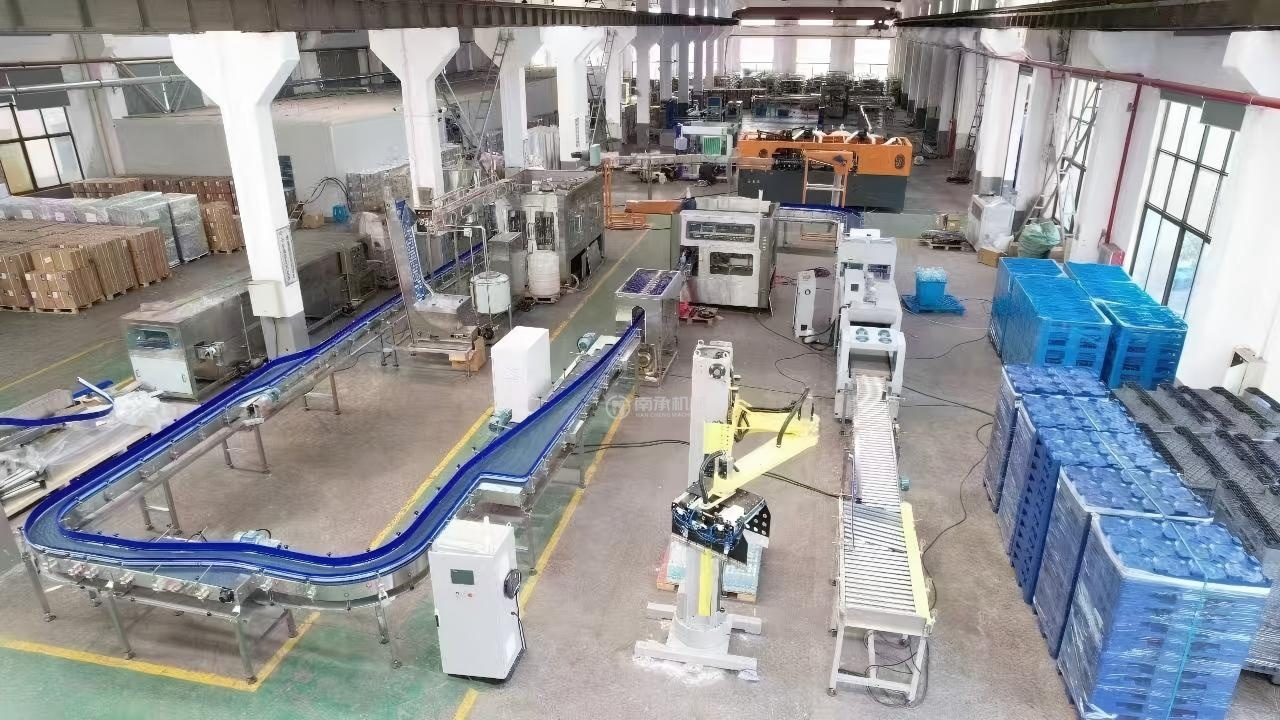
A modern turnkey water bottling plant typically includes the following stages:
Fully automatic rotary systems are recommended for:
Lower labor costs
Stable bottle neck precision
Higher efficiency
Better bottle consistency
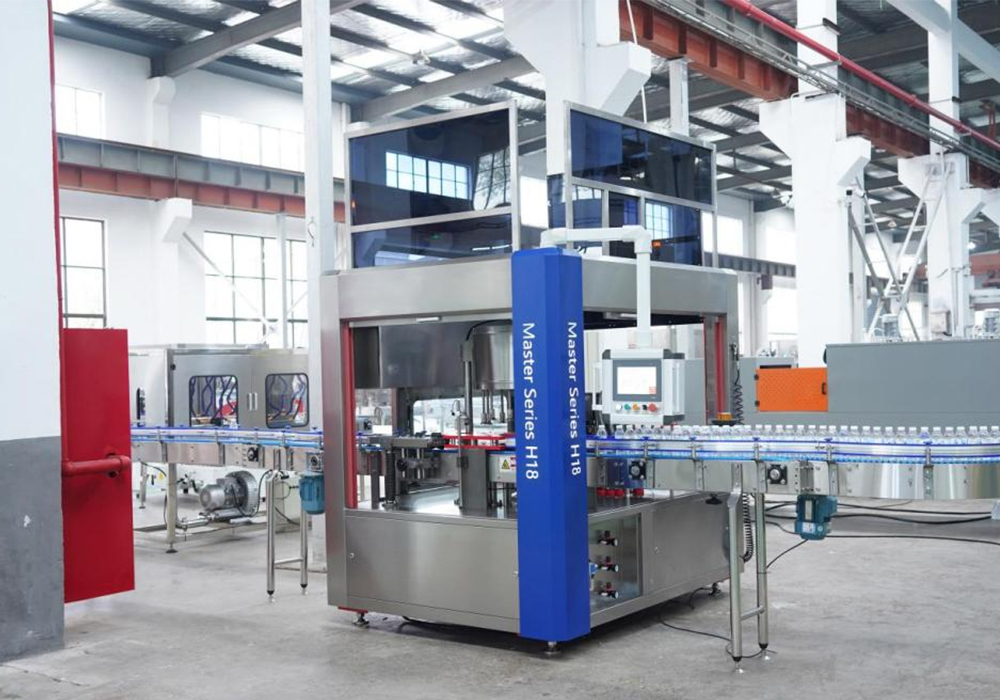
3-in-1 Monoblock Filling Machine
The heart of the factory is the:
3-in-1 Monoblock Rinsing-Filling-Capping Machine
This system combines:
Bottle rinsing
Water filling
Cap sealing
inside one hygienic enclosed system.
Modern suspension neck-handling technology allows fast bottle changeovers between:
500ml
1L
1.5L
with minimal downtime.
Choosing an experienced water bottling machine manufacturer is extremely important because filling accuracy and long-term stability directly affect profitability.
OPP Labeling Machine
Brazilian bottled water companies widely prefer:
OPP wrap-around labels
because they provide:
Lower material cost
High-speed operation
Better efficiency for mass production
Compared with adhesive sticker labels or sleeve labels, OPP labeling is usually more economical for large-scale water production.
Laser Date Coding Machine
Laser coding systems print:
Production dates
Batch numbers
Expiration dates
Advantages include:
No ink consumables
Clear printing
Better durability in humid environments
Lower maintenance costs
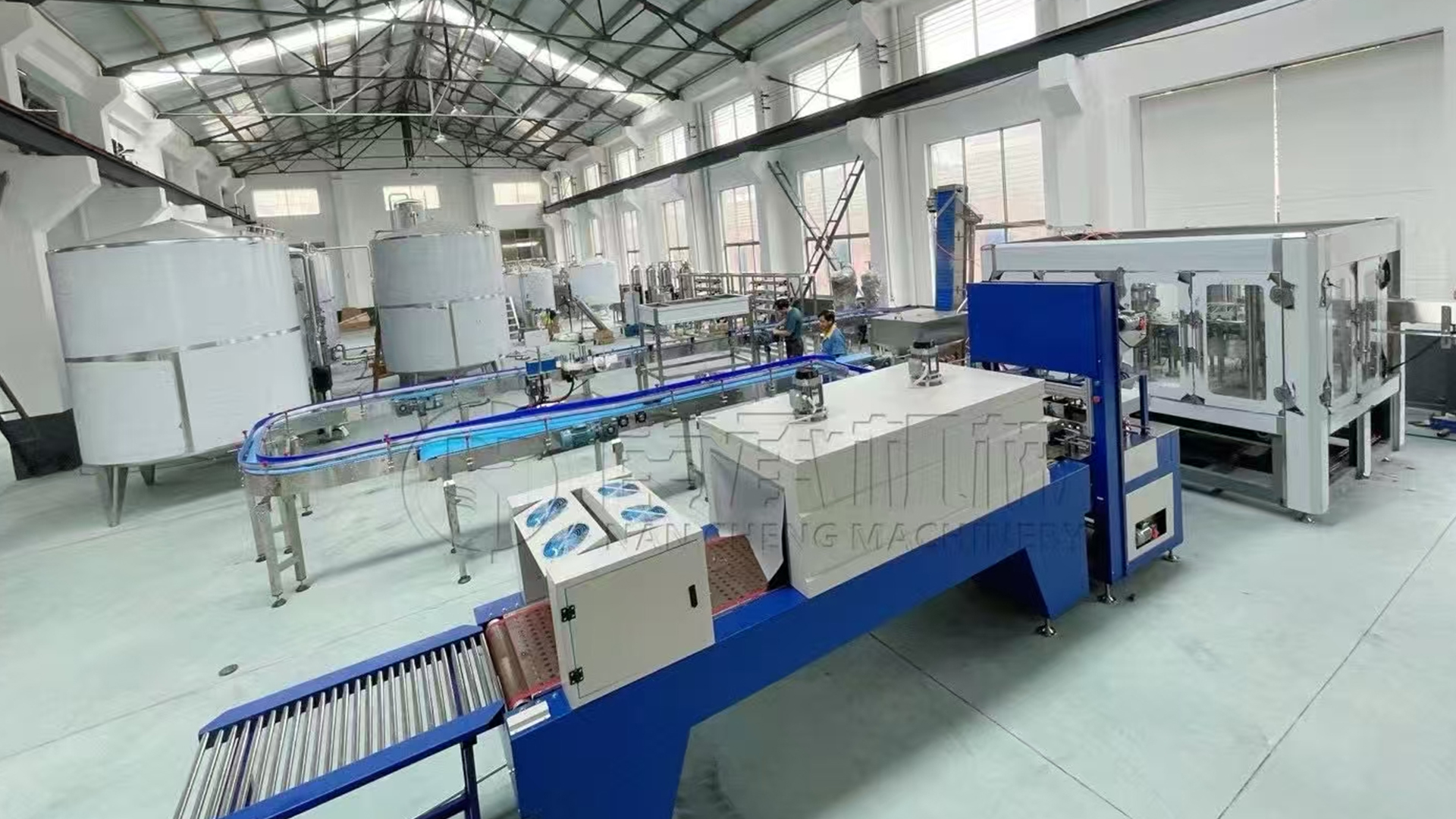
Automatic Shrink Wrapping Machine
Shrink film packaging remains the dominant secondary packaging method across Brazil and Latin America.
Common pack formats:
24 × 500ml
12 × 1.5L
6 × large bottles
Advantages include:
Lower packaging costs
Better transportation efficiency
Faster packaging speeds
Step 5: Water Bottling Plant Investment Cost in Brazil (2026)
Investment costs depend on:
Production capacity
Bottle types
Automation level
Packaging method
Utility systems
Factory size
Typical Investment Reference
Production Capacity
Estimated Equipment Investment
Suitable For
ROI Timeline
1000–2000 BPH
USD 40,000 – 80,000
Small startups
12–18 Months
3000–6000 BPH
USD 120,000 – 300,000
Regional brands
18–24 Months
8000–12000 BPH
USD 300,000 – 650,000
Industrial supply
24–36 Months
18000–24000 BPH
USD 800,000 – 1.5M+
National brands
36+ Months
Important:
The figures above are reference estimates only. Final investment depends on configuration requirements, local installation conditions, utility systems, and automation options.
For a deeper financial analysis, you can also read:
One of the biggest mistakes investors make is underestimating future expansion space.
Step 7: Packaging Strategy for the Brazilian Market
Different market segments require different packaging strategies.
Mass-Market Bottled Water
Usually uses:
Lightweight PET bottles
OPP labels
Shrink film packaging
Advantages:
Lower production cost
Faster line speed
Lower logistics costs
Premium Water Brands
Usually use:
Thick-wall PET bottles
Glass bottles
Premium sleeve labels
Carton packaging
Advantages:
Better shelf appearance
Higher retail pricing
Stronger hotel & restaurant positioning
Step 8: Operating Costs & Energy Consumption
Many investors underestimate long-term operating expenses.
Main Operating Costs
Electricity
Major power consumers include:
Air compressors
Blow molding systems
Chillers
Shrink tunnels
Energy-efficient systems can dramatically reduce operating costs.
PET Preforms
PET preforms are one of the largest recurring expenses.
Lightweight bottle technology can significantly improve profit margins.
Caps & Labels
Packaging materials directly affect production cost.
For example:
OPP labels are usually cheaper than sticker labels
Shrink film is cheaper than carton packaging
Labor
Automation reduces:
Labor dependence
Human error
Production inconsistency
Factory Acceptance Testing (FAT) Before Shipment
Before delivery, Nancheng Machinery performs complete FAT (Factory Acceptance Testing) for turnkey water bottling plants.
Testing includes:
Bottle conveying stability
Filling accuracy
Capping testing
Label positioning
Shrink wrapping performance
Production speed verification
Customers can participate through:
On-site factory inspection
Live video conference testing
Sample production verification
This helps reduce installation risks and improves project reliability.
Common Mistakes New Investors Make
Choosing Machines Only Based on Price
Low-cost equipment often creates:
Production downtime
Pneumatic failures
Inconsistent filling
Poor spare parts support
Downtime is one of the biggest threats to beverage profitability.
Ignoring Bottle Weight Optimization
PET material can represent up to 70% of bottle production cost.
Choosing machinery compatible with lightweight bottles can significantly improve margins.
Poor Hygienic Factory Design
Failure to separate:
Clean zones
Packaging zones
Blow molding zones
may create sanitation problems during inspections.
Why Investors Choose Nancheng Machinery
Nancheng Machinery specializes in turnkey bottled water production lines with installations across more than 60 countries.
The company provides:
Water treatment systems
PET bottle blowing machines
Water filling machines
OPP labeling machines
Packaging systems
Complete turnkey water bottling plant solutions
Genuine Manufacturer Advantage
Unlike many trading companies, Nancheng Machinery operates its own manufacturing facility with:
CNC machining
Stainless steel fabrication
Electrical assembly
FAT testing procedures
This ensures:
Better quality control
Competitive pricing
Long-term spare parts support
Faster technical communication
Customized Engineering Solutions
Nancheng engineers can provide:
Factory layout drawings
Utility consumption analysis
Equipment configuration planning
Future expansion planning
Packaging optimization suggestions
Global Installation & Remote Technical Support
Nancheng Machinery offers:
Overseas installation
Operator training
Online troubleshooting
Long-term technical service
Frequently Asked Questions About Water Bottling Plants in Brazil
How much does it cost to start a water bottling company in Brazil?
A small-scale water bottling plant in Brazil typically requires an investment between USD 50,000 and USD 150,000 depending on production capacity, bottle types, and automation level.
Is RO water allowed for bottled water production in Brazil?
Yes. Reverse osmosis (RO) purified water is widely used for packaged drinking water production in Brazil, especially for municipal water treatment projects.
Which bottle size is most profitable in Brazil?
500ml PET bottles and 20L returnable gallon bottles (Galão) are currently among the most profitable and highest-volume bottle formats in Brazil.
What labeling system is most commonly used in Brazil?
For high-speed commercial production, OPP wrap-around labeling is usually the most economical solution because of its lower material cost and high production efficiency.
Request Your Customized Water Bottling Plant Proposal
If you are planning to invest in Brazil’s growing bottled water market, Nancheng Machinery can help you build a high-efficiency, ANVISA-compliant turnkey water bottling plant customized to your budget and production goals.
We can provide:
Free factory layout drawings
Equipment configuration recommendations
Utility consumption analysis
ROI estimation
Bottle design suggestions
Packaging optimization plans
Our turnkey solutions support:
500ml PET water
1.5L bottled water
5L bottles
20L gallon water
Sparkling water
Premium mineral water
Explore our complete water bottling plant for sale solutions or contact Nancheng Machinery today for customized technical proposals, video references, and factory layout recommendations.
 English
 العربية
 Français
 Русский
 Español
 Português
 Deutsch
 italiano
 Nederlands
 Tiếng Việt
 ไทย
ไทย Polski
 Türkçe
 አማርኛ
አማርኛ Bahasa Melayu
 Filipino
 Bahasa Indonesia
 magyar
 Română
 Čeština
 Монгол
 қазақ
қазақ Српски
 हिन्दी
 فارسی
فارسی Kiswahili
 Slovenčina
 Slovenščina
 Norsk
Norsk Svenska
 українська
 Suomi
Suomi Հայերեն
 Dansk
Dansk اردو
اردو Shqip
Shqip বাংলা
বাংলা Hrvatski
 Eesti keel
 සිංහල
සිංහල नेपाली
 Oʻzbekcha
 latviešu
 Azərbaycan dili
 Български
 ქართული
 Hausa
Hausa Igbo
Igbo Lietuvių
 Soomaali
 Yorùbá